Why Palmwag’s desert rhino tracking belongs on a luxury itinerary
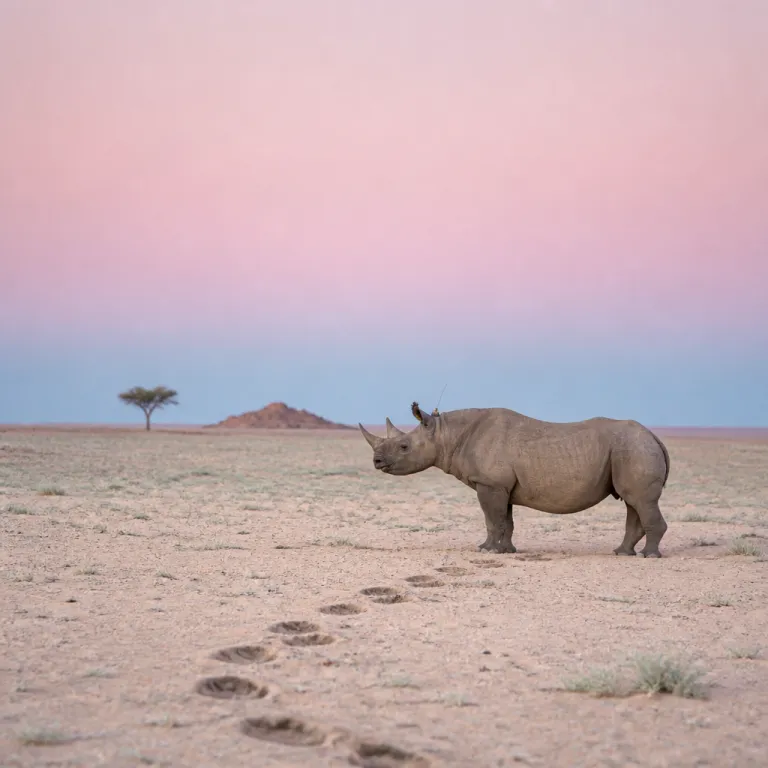
Desert rhino tracking in Palmwag, Namibia sits in a different league from a classic game drive safari. In this stark Namibia desert, free-roaming black rhinos move through volcanic hills that feel more lunar than African, and the entire experience is built around walking quietly into their adapted wilderness rather than chasing sightings by vehicle. For couples used to polished lodges and infinity pools, this is the rare wilderness experience that still feels genuinely wild yet is seamlessly integrated into premium camp Namibia stays.
The Palmwag concession in Damaraland holds one of the most important free-roaming black rhino populations on Earth, and these desert-adapted animals have learned to survive on sparse browse shrubs and hidden seeps. When you book a rhino camp here through a curated luxury platform or specialist operator, you are not just choosing a room with a view; you are buying into a conservation model where every tracking fee helps save rhino and supports the local Damara communities that co-manage this landscape. For discerning travelers, that alignment between indulgent comfort and measurable impact is often the deciding factor between Damaraland and more conventional national park lodges.
From a planning perspective, desert rhino tracking in Palmwag works best as the anchor of a three-night stay, with one full day dedicated to rhino tracking and other days reserved for slower safari drives and stargazing. Many couples pair a Damaraland–Etosha combination, spending several nights in Etosha National Park for classic waterhole wildlife before retreating to the Palmwag concession for adapted wildlife and quieter luxury. This rhythm between structured rhino tracking and unhurried camp life creates a balanced experience that feels both romantic and deeply rooted in nature.
The tracking protocol: how a morning on foot really unfolds
A typical desert rhino tracking Palmwag Namibia morning begins in the dark, with coffee and a quick briefing before first light touches the desert. You leave rhino camp in an open 4x4, driving for roughly thirty to sixty minutes across Damaraland’s basalt plateaus while the guides scan for overnight tracks of black rhinos and other animals such as mountain zebra and oryx. Once the trackers are satisfied with fresh spoor, the vehicle stops well away from any potential rhino and the real experience begins on foot.
The protocol is precise; groups are kept deliberately small, usually four to six guests, accompanied by at least two Save the Rhino Trust (SRT) trackers and a professional guide who carries a radio and often a rifle as a last resort. Walks last between three and six hours depending on conditions, with a measured pace that allows you to read the desert-adapted landscape, from shrubs browsed by black rhino to faint prints of other adapted wildlife like springbok and oryx. There are no vehicles near animals at any point, which keeps the encounter low impact and preserves the free-roaming behaviour that makes this corner of Namibia so rare.
Luxury travelers sometimes ask whether this is more demanding than climbing a dune at Sossusvlei, and the answer is nuanced. The terrain is rocky rather than sandy, with short ascents over lava ridges instead of long dune slogs, so a reasonably fit couple used to walks of eight to ten kilometres will cope well. If you have already tackled a refined desert stay around Sossusvlei, articles such as this guide to climbing Dune 45 for a refined desert stay give a good benchmark for the level of effort, though rhino tracking adds the unpredictability of following live animals.
The guides and trackers: Save the Rhino Trust at work
The human element is what elevates desert rhino tracking Palmwag Namibia from a memorable walk to a genuinely transformative safari. Tracking is led by Save the Rhino Trust Namibia, often shortened to SRT, whose trackers know individual black rhinos by sight and can read a single scuff in the dust like a page of text. Many of these men and women come from nearby Damara communities, and their multi-decade experience in this wilderness is the quiet backbone of the entire operation.
Alongside SRT trackers, you will usually have a Wilderness Safaris Namibia guide or another FGASA-qualified professional who manages guest safety and interprets the broader wildlife story. These guides are adept at explaining how adapted black rhinos differ from their counterparts in Etosha National Park, why desert-adapted behaviour matters, and how the Palmwag concession became a model for community-based conservation in Namibia. One of the most reassuring lines you will hear, often repeated to nervous first timers, is this simple statement from the official briefing material: “Is rhino tracking safe? Yes, when guided by trained professionals.”
For travelers who have already walked with desert-adapted elephants in other concessions, the protocol will feel familiar yet more intense. The same respect for distance applies, but the stakes with a black rhino are higher, which is why only the most experienced trackers lead these walks and why group sizes remain small. One veteran tracker summed it up during a post-walk debrief: “We are here to read the rhino’s mood, not to push for a photograph,” a philosophy that shapes every decision in the field. If you are comparing different on-foot experiences, resources such as this deep dive into tracking desert adapted elephants on foot help frame how Palmwag’s rhino tracking sits at the apex of Namibia’s walking safaris.
The odds, the ethics and what happens if you do not see a rhino
Any honest account of desert rhino tracking Palmwag Namibia must address the odds of an actual sighting. In the long dry months, when water is scarce and tracks are easier to read, guides and SRT monitoring teams informally report that guests encounter desert rhino on roughly seven to eight outings out of ten, while in wetter periods the success rate drops noticeably. Those numbers are estimates rather than audited statistics and should be treated as approximate, but they do not capture how powerful the experience can be even on a so-called blank day.
Walking for several hours through the Namibia desert, following the story of a free-roaming black rhino written in prints and dung, is its own kind of luxury, especially when you return to camp for cool towels and a late brunch. Ethical protocols mean that if the wind shifts or the rhino shows any sign of stress, SRT trackers will back off long before you get a perfect photograph, and that restraint is precisely what keeps this population relaxed and truly wild. For many couples, the knowledge that their tracking fee directly funds anti-poaching patrols and community salaries makes even a rhino-free morning feel like a meaningful investment rather than a missed opportunity.
From a broader itinerary perspective, you can hedge your wildlife odds by pairing the Palmwag concession with Etosha National Park, where waterhole viewing is more predictable and dense. A detailed guide to Etosha in winter and its waterhole sessions explains why many travelers structure their trip as Etosha first, Damaraland second. That way, you arrive in this quieter wilderness already satisfied with big game sightings and free to treat rhino tracking as a rare privilege rather than a box to tick.
Where to stay: camps, star beds and how to book well
Choosing the right camp Namibia base is crucial if you want desert rhino tracking Palmwag Namibia to feel both adventurous and indulgent. High-end properties in and around the Palmwag concession, such as Desert Rhino Camp or Grootberg Lodge, typically offer spacious canvas or stone suites with private decks that look across Damaraland’s red ridges and dry riverbeds where mountain zebra and other animals move at dusk. Some lodges now feature a star bed option, allowing couples to sleep out under the Milky Way after a day of rhino tracking and stargazing in near total silence.
When comparing options, look for camps that explicitly partner with Save the Rhino Trust or list SRT trackers in their activity descriptions, because this signals that your fees are routed into verified conservation programmes. Ask how many rhino tracking departures they run per week, how many nights they recommend for a realistic chance of joining at least one walk, and whether private departures for two can be arranged at a premium. Serious operators will be transparent about the physical demands, the three to six hour duration, and the fact that wildlife encounters, including black rhinos, black rhino calves and other adapted wildlife, can never be guaranteed.
Booking through a specialist platform focused on Namibia’s luxury and premium stays helps align your expectations with the reality of this wilderness. Curated sites or dedicated safari planners can advise on typical nightly rates, which for fully inclusive desert rhino tracking packages often sit in the mid to upper luxury bracket, and on how far in advance to secure space, with six to twelve months recommended for peak dry season. For couples planning a wider safari that includes Etosha National Park and perhaps the coast, this kind of honest curation is the difference between a generic desert camp and a stay that feels intimately connected to the story of Namibia’s adapted black rhinos.
FAQ
Is rhino tracking in Palmwag safe for first time walkers ?
Rhino tracking in the Palmwag concession is considered safe when you follow guide instructions and walk only with accredited SRT trackers and professional guides. Distances to the animals are carefully managed, and the team constantly reads wind and behaviour to avoid stress. Guests with moderate fitness who are comfortable walking several kilometres in warm desert conditions usually cope well, but anyone with serious mobility, cardiac or respiratory issues should seek medical advice before booking.
How long does a desert rhino tracking outing usually last ?
A standard desert rhino tracking Palmwag Namibia excursion runs as a half-day experience, typically three to six hours from the time you leave camp to your return. The first part involves a 4x4 drive to locate fresh tracks, followed by several hours on foot in the wilderness. In hotter months, departures start at dawn so that most of the walking happens before midday heat builds.
What should I wear and bring for a tracking morning ?
Wear sturdy closed footwear with good grip, neutral-coloured clothing, a wide-brimmed hat and layered tops for cool starts and warm finishes. Bring high-factor sun protection, at least one litre of water per person, and a small daypack for camera gear and snacks. Camps usually provide binoculars, but serious wildlife enthusiasts often prefer to carry their own optics.
When is the best season for tracking desert adapted black rhinos ?
Tracking operates year round, but the cooler, drier months from May to September generally offer more comfortable walking temperatures and clearer spoor. During these periods, success rates for sightings of desert-adapted black rhinos tend to be higher because vegetation is thinner and water sources more predictable. Wet months can still be rewarding, yet guides will emphasise the walk and the broader nature experience rather than promising close rhino encounters.
How does my tracking fee support conservation and local communities ?
Your tracking fee helps fund Save the Rhino Trust Namibia’s monitoring patrols, vehicle maintenance and tracker salaries, which are essential to protecting free-roaming black rhinos from poaching. A portion of revenue also flows to local conservancies, creating financial incentives for communities to safeguard wildlife and habitat. By choosing camps that formally partner with SRT and other conservation organisations, you ensure that your luxury safari spend contributes directly to long-term rhino survival.