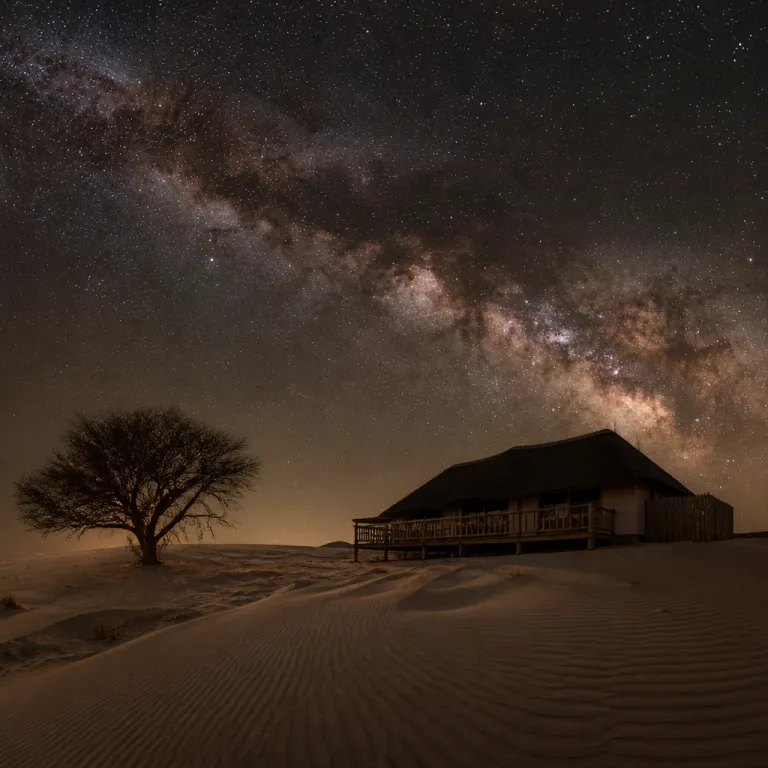
Why the NamibRand dark sky winter Milky Way season matters
NamibRand Nature Reserve is where the night sky still feels wild. Between June and September, this winter Milky Way window turns the Namib Desert into one of the southern hemisphere’s most reliable open air observatories. Couples who care as much about stars as sundowners will find that this region in Namibia offers a rare blend of luxury, astronomy and silence.
NamibRand is Africa’s first International Dark Sky Reserve, and its 172 200 hectares of protected dunes and gravel plains sit far from artificial light or busy roads. That isolation translates into some of the darkest skies on the Bortle scale, with a sky darkness level measured at class 1, meaning the Milky Way can cast a faint shadow on the sand. Sky Quality Meter readings around 21.9–22.0 mag/arcsec² have been reported by the NamibRand Nature Reserve and the International Dark-Sky Association, placing it among the darkest regularly accessible sites on Earth (see International Dark-Sky Association and NamibRand Nature Reserve technical notes). For travelers used to city glow and constant light pollution, the first clear view of the night sky here can feel almost disorienting.
Winter in this part of dark Namibia brings clear, dry air with virtually no humidity, so the Milky Way’s galactic core stands high overhead for long hours. From June to August, the bright Milky Way band stretches from horizon to horizon, while September still offers excellent stargazing as the star fields set earlier each night. Under these skies, you see not just a single star or two, but dense rivers of stars, the Magellanic Clouds, and deep sky objects like Omega Centauri with the naked eye.
June to September: timing your stay for the brightest stars
Planning a luxury stay around the NamibRand winter Milky Way season means thinking in lunar phases, not just vacation dates. New moon weeks between June and September give the darkest skies, when the moon slips below the horizon early and the Milky Way dominates the night sky. During full moon periods, the desert still feels magical, but the bright light washes out the faintest stars and softens the view of the galactic core.
From June, the Milky Way is visible from dusk to dawn, and long exposure photographers can work almost all night without interruption. In mid-winter, the galactic center rises by early evening and remains high until after midnight, so couples can enjoy dinner and still have several hours of prime viewing. July brings the longest nights of the southern winter, ideal for couples who want a slow meal, a glass of wine, then a guided sky experience with a resident astronomer. August and September remain excellent for stargazing in this nature reserve, though the core of the Milky Way sets earlier, which suits travelers who prefer an early sleep after their view of the night sky.
Temperature is the other quiet variable that shapes how you enjoy this dark sky reserve in Namibia. After dark, desert air at altitude drops quickly, with winter night temperatures often falling to 0–5°C (32–41°F), so you will want insulated layers, a hat and gloves for any extended view at the telescope. For a deeper look at how these winter conditions compare with other Namibian seasons, use a planning resource such as this guide on choosing the best time to visit Namibia for luxury stays and safaris.
Where to stay: lodges that understand the night sky
Not every lodge in Namibia is built around the night sky, but the best NamibRand properties treat astronomy as a core part of the stay. &Beyond Sossusvlei Desert Lodge, set on the edge of the reserve, offers a private observatory with a computerized telescope and a resident astronomer who translates the southern sky into stories. Here, couples can move from the infinity pool to the telescope dome in a single evening, trading dune views for a close look at star clusters and the Milky Way’s dust lanes.
Kwessi Dunes, inside NamibRand Nature Reserve, leans into the sky experience with open air star beds and guided stargazing sessions on its viewing deck. Under some of the darkest skies in the region, you lie under a duvet while your guide points out the Southern Cross, the Magellanic Clouds and Omega Centauri, all visible with the naked eye. The lodge’s position within the sky reserve means almost zero artificial light, so even a casual view at night from your room reveals thousands of stars.
For travelers who want a more astronomy focused stay beyond NamibRand, Tivoli Astrofarm and Hakos Guest Farm sit on the Gamsberg plateau, an area known for up to 220 astronomically useful nights per year. These properties attract serious astrophotographers who travel with long exposure rigs, but couples new to astronomy are equally welcome. Many guests book telescope time or imaging sessions in advance, especially around new moon. If you are pairing a desert sky reserve stay with coastal drama, consider adding a chartered detour such as this detailed look at what 48 hours on the Skeleton Coast by charter delivers.
What you actually see: from Southern Cross to the Milky Way core
Under the NamibRand dark sky in winter, the southern hemisphere reveals a different celestial map from North American or European skies. The Southern Cross hangs low over the dunes, pointing toward the south celestial pole, while the two Magellanic Clouds float like detached pieces of the Milky Way. Between them, the central bulge of the galaxy glows as a bright, milky band, textured with dark dust lanes that are obvious even to the naked eye.
Guides and resident astronomers in this region do more than name constellations; they connect astronomy with culture and nature. Many lodges weave in San and Ju/'hoansi star lore, explaining how local communities read the night sky for seasonal cues long before telescopes arrived in Namibia. During winter, when the air is dry and the skies are consistently clear, you can trace the Milky Way from horizon to horizon, pick out individual star clusters, and see Omega Centauri as a hazy patch that resolves into thousands of stars through a telescope.
On moonless nights, the absence of artificial light in this nature reserve means even subtle features stand out, from the Coal Sack dark nebula near the Southern Cross to the faint glow of zodiacal light before dawn. During a bright full moon, the experience shifts; the dunes and mountains are lit in silver, and the desert landscape competes with the stars for your attention. Either way, the view at night feels immersive, and couples often find that a single clear night under these skies changes how they think about darkness back home.
Designing a luxury stay around the NamibRand night sky
Building a romantic itinerary around the NamibRand dark sky winter Milky Way season means treating the night as the main event, not an add on. Start with at least three nights in or near NamibRand Nature Reserve, which gives you a buffer in case of rare cloud or wind, and allows for both guided stargazing and quiet, private sky time. Many couples pair this with a stay near Sossusvlei, where sunrise over the dunes complements the night sky reserve experience.
When you book, ask specific questions about how each lodge handles light at night, because even a single bright pathway lamp can dilute the darkest skies. Properties that take their International Dark Sky Reserve status seriously will use low, warm lighting, shielded fixtures and optional red torches for guests walking between suites. You should also confirm whether a resident astronomer is on site, what telescopes or binoculars are available, and whether they offer astrophotography support for long exposure images.
Packing is simple but strategic; bring binoculars, a headlamp with a red light mode, and enough warm layers to sit still outside for an hour after dark. A practical checklist includes thermal base layers, a windproof jacket, beanie, gloves, thick socks, lip balm and a soft case for optics to protect against dust. For couples who enjoy design driven stays, it can be interesting to compare how a desert lodge frames its view of the night sky with how a coastal property frames the ocean, as seen in this bayside perspective on a bayside escape to ultimate luxury. In both cases, the most memorable luxury is often not the room itself, but the way the property positions you to feel part of the surrounding nature.
Practical stargazing tips for couples in NamibRand
Even in a place as forgiving as NamibRand, a few practical choices can elevate your sky experience from pleasant to unforgettable. For beginners, binoculars often beat small telescopes, because they are intuitive to use and give a wide field that frames the Milky Way against the desert horizon. A simple reclining chair or a warm blanket on a deck can turn an ordinary view at night into a slow, shared ritual.
Guided sessions usually start with naked eye orientation, then move to telescopes for closer looks at star clusters, nebulae and the moon when it is visible. Many lodges provide star charts or tablet based sky maps, but the most valuable asset remains a guide who knows how to read both the sky and the guests’ attention span. As one local answer puts it clearly, “June to August offers optimal viewing conditions,” with the best contrast typically between about 21:00 and 02:00.
Astrophotographers should plan for long exposure work, bringing sturdy tripods, remote shutters and fast lenses to capture the NamibRand dark sky winter Milky Way in detail. Even if you are not chasing perfect images, a few seconds of exposure on a modern camera will reveal more stars than your eyes can see, especially under these darkest skies. Whether you visit in June, July, August or September, the combination of clear skies, minimal light pollution and careful lodge design makes this region of dark Namibia one of the most rewarding places on Earth to simply lie back and look up.
FAQ
What is the best time to see the Milky Way in NamibRand ?
The prime window to see the Milky Way in NamibRand runs from June to August, when the galactic core is high in the southern sky for much of the night. During these winter months, the air is dry and clear, and nights are long, which maximizes your chances of multiple excellent stargazing sessions. September still offers strong views, though the Milky Way sets earlier, so you will want to plan your evenings accordingly.
Are there guided stargazing tours available in the reserve ?
Yes, several lodges in and around NamibRand Nature Reserve offer guided stargazing experiences with trained staff or a resident astronomer. Properties such as Kwessi Dunes host structured sessions on viewing decks, while &Beyond Sossusvlei Desert Lodge operates a private observatory with a computerized telescope. These tours typically cover southern constellations, the Magellanic Clouds and key deep sky objects, and often include cultural stories linked to the stars.
Do I need special equipment to enjoy the night sky ?
You do not need any special equipment to enjoy the NamibRand night sky, because the Milky Way and major constellations are striking to the naked eye under such dark conditions. Binoculars are an excellent upgrade for beginners, offering a wide, bright view of star fields without the complexity of a telescope. Many luxury lodges provide telescopes and star charts on site, so you can experiment without investing in gear before your trip.
How cold does it get at night in winter ?
Winter nights in NamibRand are cold, especially after midnight, with temperatures often dropping close to freezing depending on altitude and wind. The dry air that makes the skies so clear also accelerates heat loss, so you will feel colder than the thermometer suggests when sitting still at a telescope. Pack insulated layers, a beanie, gloves and warm socks, and ask your lodge for blankets or hot water bottles during extended stargazing sessions.
Is NamibRand suitable for serious astrophotography ?
NamibRand and the nearby Gamsberg region are highly regarded by serious astrophotographers because they combine Bortle class 1 darkness with stable, dry air and many clear nights per year. Long exposure imaging of the Milky Way, Omega Centauri and other deep sky objects is possible directly from some lodge decks, especially during new moon weeks. For more specialized setups, properties such as Tivoli Astrofarm and Hakos Guest Farm cater to guests who travel with dedicated mounts, cameras and telescopes.
How do I reach NamibRand and what should I budget ?
Most visitors access NamibRand via overland transfer from Windhoek or Swakopmund, with drive times typically around five to seven hours depending on route and road conditions, or by light aircraft charter to nearby airstrips arranged through their lodge. Because the reserve is privately managed, you usually book accommodation, conservation fees and activities as a package through the property or a specialist tour operator rather than purchasing separate permits. Luxury dark sky lodges in and around NamibRand generally sit in the premium price bracket, with nightly rates often comparable to high end safari camps in Namibia, especially during the peak June to September Milky Way season.