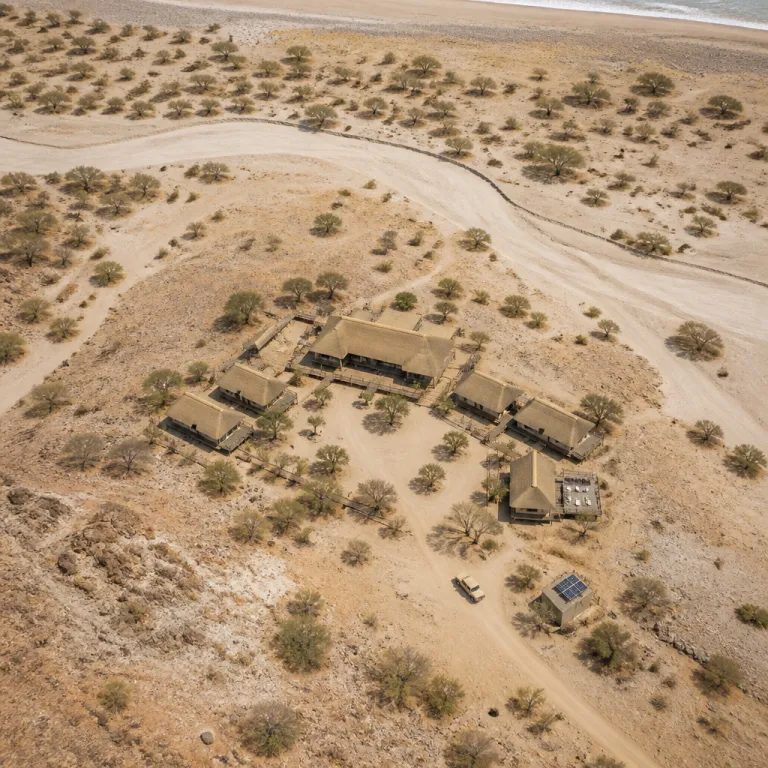
Hoanib Skeleton Coast Lodge in context: where Namibia feels truly remote
Hoanib Skeleton Coast Lodge lies in the Kaokoveld region of northwestern Namibia, in a private concession that feels far beyond the usual safari circuit. This is a wilderness area of about 5 000 square kilometres, managed as a luxury camp by Wilderness Safaris with a clear focus on conservation and low impact travel. According to Wilderness Safaris’ published lodge information, the concession stretches from the Hoanib River towards the Skeleton Coast, where the Namib Desert meets the Atlantic in a stark yet beautiful collision of sand, rock, river and ocean.
Travellers usually reach this desert lodge by light aircraft from Windhoek or from other Namibian hubs, which immediately underlines how remote the camp really is. Wilderness Safaris typically quotes flight times of around 1–2 hours from key airstrips such as Windhoek Eros (ERS) or Doro Nawas (DNRS), with costs bundled into most-inclusive packages priced in USD or Namibian dollars. Luggage limits on these sectors are generally around 15–20 kg per person in soft bags, including hand luggage and camera gear. The gravel airstrip lies close to the Hoanib River, and the short transfer to the lodge often reveals desert adapted wildlife such as oryx and giraffe moving through dry riverbeds and rocky slopes, with dust hanging in the cool morning air.
Because the area is so isolated within this corner of Africa, the camp feels like a self contained valley camp, with the main spaces oriented towards a broad, sandy river valley that glows gold in late afternoon light. Hoanib Skeleton Coast Lodge is often described as a coast camp and a desert camp at the same time, and that dual identity shapes every trip here. Guests might spend one day exploring the Hoanib Valley and the surrounding mountain camp style landscapes, then fly or drive out towards the Skeleton Coast for a completely different experience of dunes and ocean fog. For travellers comparing remote lodges across Namibia and even South Africa, this Hoanib setting stands out because it combines a dramatic desert, a life giving river and access to the legendary Skeleton Coast in one itinerary friendly location.
Design, rooms and the quiet luxury of a tented camp
The lodge is designed as an intimate tented camp, with only eight luxury tents and one family unit carefully spaced along the edge of the Hoanib River valley. Wilderness Safaris confirms this nine-room configuration in its lodge fact sheets, highlighting the deliberately low guest density and personalised service. Each suite is raised on a deck, with canvas and solid walls that insulate against the desert heat while framing wide views over the surrounding wilderness. Inside, the décor leans towards understated Africa inspired elegance, with neutral tones, natural textures and thoughtful details that feel adapted to the harsh yet captivating Namib Desert environment.
Every tented room offers an en suite bathroom, indoor and outdoor showers and a shaded outdoor lounge where you can watch wildlife drift across the riverbed. In the stillness of midday, you may hear only the rustle of wind over the gravel plains and the soft creak of canvas as the temperature rises. The main area of this desert lodge includes a pool, bar and dining deck, all oriented towards the Hoanib Valley so that even relaxed moments between activities feel like part of the safari. At night, the Hoanib camp team often sets up a fire pit near the outdoor lounge, turning the valley camp into a quiet amphitheatre of stars, desert silence and distant calls of adapted wildlife.
Wilderness Hoanib is powered largely by solar energy, which aligns with the broader sustainability ethos of Wilderness Safaris across Namibia and the rest of Africa. The camp’s infrastructure has been carefully adapted to the fragile desert, with raised walkways and minimal permanent foundations that respect the river system and surrounding area. As one Wilderness Safaris guide explains in camp briefings, the aim is “to leave as light a footprint as possible while still giving guests a genuinely comfortable desert experience.” If you are interested in eco sensitive properties, you may also want to read about an eco luxury escape that inspires Namibian journeys on this site, which places Hoanib Skeleton Coast Lodge within a wider conversation about responsible travel in remote landscapes.
Safari experiences from Hoanib Skeleton Coast Lodge: from riverbeds to the Skeleton Coast
Days at Hoanib Skeleton Coast Lodge revolve around guided safari activities that reveal how much life survives in this apparently empty desert. Morning and afternoon game drives follow the Hoanib River and its tributaries, where desert adapted elephants, lions, giraffes and oryx move between pockets of vegetation and dry waterholes. These drives often extend into the broader area of the private concession, where the Namib Desert opens into wide gravel plains and rugged hills that feel far removed from more crowded national park routes, with vehicles sometimes driving for an hour without seeing another car.
One of the main highlights of any trip here is the full day excursion to the Skeleton Coast, which usually combines 4x4 driving with a scenic light aircraft flight. Guests travel down the Hoanib River towards the coast, passing through narrow gorges and a dramatic valley before reaching the Atlantic, where shipwrecks and seal colonies underline why this shoreline earned the name Skeleton Coast. The air smells of salt and kelp, and the cool ocean breeze is a striking contrast to the dry heat inland. After a picnic lunch on the beach, a light aircraft flight returns you to the lodge, revealing the scale of the desert, the river systems and the transition from inland dunes to the wild coast camp environment.
Because this is a private concession managed by Wilderness Safaris, guides can adapt each safari to your interests, whether you want to focus on photography, geology or tracking specific wildlife. A typical day might include following elephant tracks along the Hoanib River at dawn, then stopping to examine ancient welwitschia plants or rock formations that tell the geological story of the Namib Desert. For travellers planning a longer luxury journey across Namibia, it is easy to combine Hoanib Skeleton Coast Lodge with other destinations such as Sossusvlei and Swakopmund, often referred to together as the classic Sossusvlei Swakopmund pairing. You can explore more ideas for Namibia vacations in style elsewhere on this website, which helps position Hoanib Skeleton Coast Lodge within a curated collection of high end properties across the country and neighbouring South Africa.
Wildlife, conservation and the role of Wilderness Safaris
The wildlife around Hoanib Skeleton Coast Lodge is defined by adaptation, with many species showing remarkable resilience to the desert climate. Guests frequently encounter desert adapted elephants moving along the Hoanib River, using their knowledge of hidden water sources to survive in an area that receives very little rainfall. Lions, brown hyenas and other predators also patrol the riverbeds and surrounding desert, creating a surprisingly dynamic safari experience in what appears at first glance to be a barren landscape. Smaller species such as jackals, springbok and various birds of prey add to the sense of a finely balanced ecosystem.
Wilderness Safaris operates the camp in partnership with local conservancies and research organisations, using tourism revenue to support conservation projects and community initiatives. The private concession model allows the lodge to limit vehicle numbers, protect sensitive habitats and monitor key wildlife populations across the Hoanib Valley and adjacent areas of the Namib Desert. Wilderness Safaris’ conservation reports for the region highlight ongoing monitoring of desert adapted lions and elephants, as well as support for anti-poaching patrols and community employment. This approach aligns with the broader goals of sustainable tourism in Namibia and Africa, where carefully managed camps can generate significant conservation funding while offering guests a rare, low impact way to travel through fragile ecosystems.
According to the camp’s own information, “Desert-adapted elephants, lions, giraffes, and oryx.” are among the headline species that guests can expect to see on a typical safari here. The presence of these animals in such an arid area highlights how important the Hoanib River and its tributaries are as lifelines within the wider Skeleton Coast region. For travellers who value meaningful wildlife encounters, Hoanib Skeleton Coast Lodge offers a chance to support on the ground conservation simply by choosing a stay at this carefully managed desert lodge, knowing that a portion of their nightly rate contributes directly to research and community projects.
Access, logistics and how to plan your trip
Reaching Hoanib Skeleton Coast Lodge requires some planning, but the journey is part of the appeal for many travellers. Most guests fly by light aircraft from Windhoek or from other safari hubs in Namibia, which reduces travel time and offers spectacular aerial views of the Namib Desert and the Skeleton Coast. Wilderness Safaris sample itineraries often reference flight sectors of roughly 60 to 120 minutes between key lodges, with luggage limits that favour soft bags and compact camera gear. The cost of these flights is usually quoted in USD or Namibian dollars, and your specialist travel consultant can integrate them into a wider itinerary that may also include destinations such as Doro Nawas or Etosha National Park.
Because the camp is small and in high demand, it is wise to book well in advance, especially if your trip falls during the dry season when wildlife viewing is at its best. Packing should focus on neutral, breathable clothing for the desert, with layers for cool mornings and evenings in the Hoanib Valley and along the coast. Many guests also bring a light scarf or buff to protect against dust on open vehicles, along with a hat and high SPF sunscreen. Photographers planning a safari that includes Hoanib Skeleton Coast Lodge may find it helpful to read the detailed guide to the dry season photography window on this site, which explains what to shoot and where across Namibia during the clearest months.
Families are welcome at this tented camp, and the lodge offers a dedicated family room configuration along with child friendly activities tailored to the wilderness environment. The Hoanib team can adapt game drives and walks to suit different ages and interests, ensuring that every member of your group feels comfortable and engaged. As one past guest described in feedback shared by Wilderness Safaris, “Our children learned more about conservation in three days at Hoanib than in a year of school projects.” Whether you are travelling from within Africa or from further afield such as Europe or South Africa, a specialist agent familiar with Wilderness Hoanib and other remote properties can help you structure a logical route that balances flight times, rest days and varied landscapes.
How Hoanib Skeleton Coast Lodge compares within Namibia’s luxury landscape
Within the context of luxury and premium hotel booking in Namibia, Hoanib Skeleton Coast Lodge occupies a distinctive niche. Many high end properties cluster around more accessible icons such as Sossusvlei, Swakopmund and Etosha National Park, whereas this camp sits deep in the Kaokoveld, closer to the Skeleton Coast than to any major town. That remoteness means the lodge appeals strongly to travellers who prioritise wilderness, exclusivity and a sense of genuine exploration over easy access to urban amenities, and who are comfortable with light aircraft transfers instead of long road journeys.
Compared with a more traditional mountain camp in central Namibia or a coastal property in Swakopmund, Hoanib Skeleton Coast Lodge offers a rare combination of desert, river and coast experiences from a single base. The main area of the camp feels like a refined oasis, yet within minutes you can be driving along the Hoanib River in search of desert adapted elephants or heading out towards the Atlantic on a full day excursion. For travellers who have already experienced classic safari destinations in South Africa or East Africa, this lodge often becomes the highlight of a return trip focused on more unusual landscapes, with guests frequently citing the Skeleton Coast excursion and the sense of isolation as standout memories.
From a booking perspective, the camp’s small size, high demand and remote logistics mean that rates reflect its status as a flagship Wilderness Safaris property in Namibia. Prices are typically quoted per person per night in USD, including meals, most drinks and scheduled activities such as game drives and nature walks. When you compare options across a curated portfolio of luxury stays in Namibia, Hoanib Skeleton Coast Lodge consistently stands out for its combination of design, service, wildlife and access to the legendary Skeleton Coast, making it a compelling anchor for any high end desert focused itinerary.
Key figures and practical statistics for Hoanib Skeleton Coast Lodge
- The private concession around Hoanib Skeleton Coast Lodge covers about 5 000 square kilometres, according to Wilderness Safaris lodge documentation, which is larger than some national parks in southern Africa.
- The camp has only eight luxury tents plus one family unit, meaning a very low guest density compared with larger safari properties elsewhere in Namibia.
- Access is primarily by light aircraft, with flights typically taking around one to two hours from major Namibian hubs, which significantly reduces overland travel time through the desert.
- The lodge operates year round, with the dry season offering the most reliable wildlife viewing along the Hoanib River and in the surrounding desert adapted habitats.
- Solar power provides the main energy source for Wilderness Hoanib, reducing generator use and supporting the camp’s broader sustainability goals in this fragile Skeleton Coast ecosystem.
FAQ about Hoanib Skeleton Coast Lodge and the surrounding area
What wildlife can be seen at Hoanib Skeleton Coast Lodge ?
Guests can expect to see desert adapted elephants, lions, giraffes and oryx along the Hoanib River and in the surrounding Namib Desert. Smaller species such as jackals, springbok and various birds of prey are also common in the area. Sightings vary by season, but the dry months usually concentrate wildlife along the main riverbeds, making it easier to find tracks and observe behaviour at close range.
How do you access Hoanib Skeleton Coast Lodge ?
Most travellers reach the camp by scheduled or chartered light aircraft from Windhoek or other regional airports in Namibia. Flights land on a nearby gravel airstrip, followed by a short 4x4 transfer to the lodge through the Hoanib Valley. Overland access is limited and usually reserved for specialist expeditions rather than standard leisure travel, which helps preserve the sense of remoteness and reduces vehicle pressure on the fragile desert terrain.
Is the camp suitable for families and multi generational trips ?
Yes, Hoanib Skeleton Coast Lodge is suitable for families, with a dedicated family room and flexible activity planning. Guides can adapt game drives, walks and educational talks to different ages, ensuring that children remain engaged and safe in the wilderness. It is important to discuss ages and expectations with your travel consultant so that the itinerary matches your family’s needs, particularly in terms of flight times, downtime between activities and any specific interests such as photography or geology.
When is the best time to visit the Hoanib region and Skeleton Coast ?
The camp operates year round, but many travellers prefer the dry season when wildlife is easier to find along the Hoanib River and temperatures are more moderate. Photographers often favour this period for clear skies and dramatic light over the desert and coast, especially in the early morning and late afternoon. Shoulder months can also be rewarding, with fewer guests and subtle seasonal changes in the landscape, including occasional ephemeral greenery after rare rainfall.
How does Hoanib Skeleton Coast Lodge support conservation and local communities ?
The lodge is managed by Wilderness Safaris in partnership with local conservancies and research organisations, with a portion of revenue directed towards conservation and community projects. The private concession model allows for controlled vehicle numbers, habitat protection and ongoing wildlife monitoring in the Hoanib Valley and adjacent Skeleton Coast area. By choosing to stay at this camp, guests contribute directly to the long term protection of desert adapted wildlife and the livelihoods of nearby communities, reinforcing the link between high end tourism and sustainable land use in Namibia.