Why June to October reshapes every luxury lodge in Namibia
By early June, the air over Namibia turns crisp and clear. As the dry season settles, every luxury lodge quietly rewrites its daily rhythm to match the hardening desert and the tightening wildlife corridors. Couples planning a Namibia dry season luxury lodge escape need to understand how this shift transforms both romance and logistics.
Across the country, from the Namib Desert to the mopane woodlands near Etosha National Park, rainfall drops to almost nothing and water becomes theatre. Lodges in this southern African nation respond by focusing attention on waterholes, river courses and private reserve springs, where wildlife viewing intensifies as the weeks pass. Namibia’s luxury safari scene leans into the clarity of the season, with safari lodges fine tuning game drives, walking routes and stargazing to the cooler temperatures and longer golden hours.
Operationally, managers and their teams adjust tour schedules, implement stricter water conservation and enhance guest amenities without diluting the sense of wild space. Luxury lodge managers in Namibia coordinate closely with safari guides and hospitality staff to balance guest comfort with sustainable practices in each area. Their shared goal is simple yet demanding; provide exceptional service while maximising wildlife encounters and protecting fragile desert landscapes.
How game drives and wildlife viewing change in the dry season
At Etosha National Park and its surrounding private reserve concessions, the first change you feel is the alarm clock. Game drives leave earlier from every lodge, chasing the cool air when predators are still active and the light over the salt pan is soft. Later in the day, instead of long loops through the bush, guides often pivot to extended waterhole vigils where wildlife viewing becomes almost cinematic.
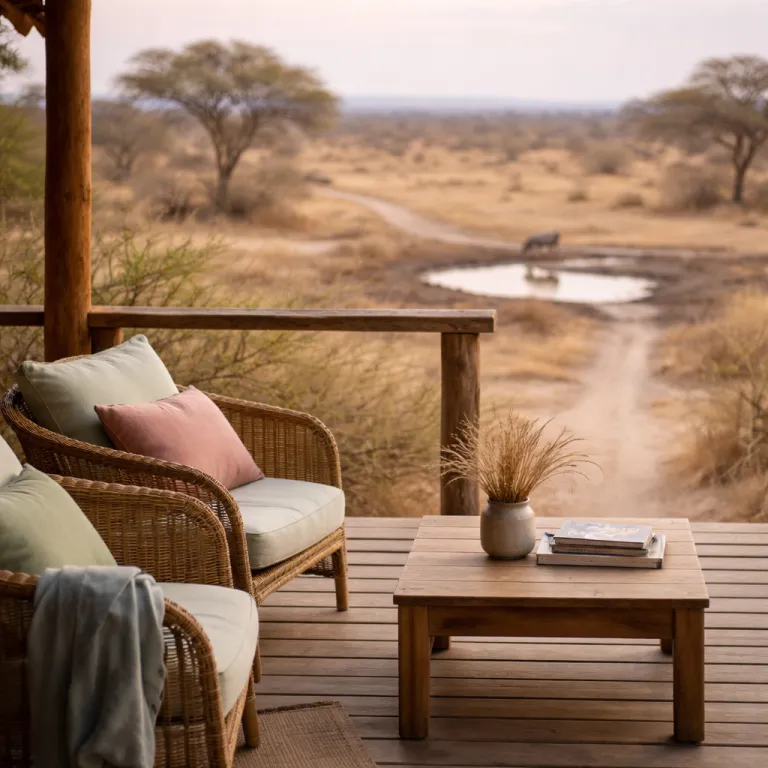
By July, herds of elephant, zebra and springbok funnel towards permanent water, and the best luxury safari guides know exactly which hide or deck to claim. At properties such as Little Ongava and Onguma Fort on the eastern side of Etosha National Park, couples can sit on their suite terrace and watch game arrive in waves, sometimes including the elusive black rhino. As one Ongava guide likes to tell guests, “If you are patient at the water, Etosha will eventually bring the story to you.” This is when a Namibia dry season luxury lodge stay feels like a private wildlife documentary, with the lodge waterhole as your screen and the surrounding desert as the soundstage.
Further west, in more remote Namibian concessions, desert adapted lions and elephants track the faint promise of a river bed or spring. Here, game drives stretch longer but cover less distance, lingering in Hoanib Valley or along ephemeral river courses where tracks tell as many stories as sightings. Guides rely heavily on 4x4 vehicles, binoculars and years of reading the land, turning each drive into a masterclass in how wildlife survives in a desert lodge environment.
From Etosha waterholes to Sossusvlei dunes: where the drama peaks
Different regions of Namibia respond to the dry season in distinct ways, and your choice of lodge should follow the experience you want most. Around Etosha, the national park’s vast pan acts like a mirror, concentrating wildlife along its southern and eastern fringes as the months progress. In contrast, the Namib Desert and its red dunes trade lush green season grasses for sculpted sandscapes and razor sharp light.
For couples focused on intense wildlife viewing, Etosha National Park and its neighbouring private reserve properties remain the strongest play between July and September. Little Ongava offers a handful of suites with direct views over a busy waterhole, while Onguma Fort on the eastern side delivers fortress like architecture facing a floodlit pan where game gathers after dark. Staying at a Namibia dry season luxury lodge in this area means your room, the main deck and even the boma become front row seats to the daily procession of game.
Shift south to Sossusvlei and the Sossusvlei desert region, and the emphasis moves from density of wildlife to the drama of landscapes. At &Beyond Sossusvlei Desert Lodge, the focus is on the interplay between the Namib dunes, the night sky and the surrounding desert adapted species that ghost across the gravel plains. Game drives here are shorter but more interpretive, often paired with guided walks into the red dunes at first light, when the Namib Desert feels almost lunar in its stillness.
Skeleton Coast, Hoanib and the far north: remote romance
For couples who value remoteness as much as sightings, the Hoanib Valley and Skeleton Coast corridor come into their own as the dry season deepens. Camps such as Hoanib Valley Camp and Shipwreck Lodge lean into the sense of isolation, with valley camp decks and shipwreck inspired suites framing endless views of sand, sea fog and distant river beds. Here, a Namibia dry season luxury lodge stay is about feeling small in a big landscape, not ticking off a game list.
Game drives in these remote Namibian areas follow dry river courses where desert adapted elephants, lions and giraffes move between scattered water sources. The Hoanib River becomes a lifeline, and guides time their routes to intersect with wildlife without crowding it, often parking under ana trees for long, quiet observation. At Serra Cafema on the Kunene River, the contrast between the green riverine strip and the surrounding desert is stark, and boat outings replace some drives as crocodiles and birds claim the spotlight.
New openings in the country’s far northeast, such as the Kwando River properties highlighted in this detailed Thitaka Lodge and Kwando River overview, extend the dry season story into lusher floodplains. Here, the river itself becomes the main stage, with boat based game viewing complementing traditional drives. A sample route for couples might run three nights at a Sossusvlei desert lodge, three nights at an Etosha or Onguma Fort style waterhole property and three nights on the Kwando or Kunene River, creating a loop that shows how the same dry season reshapes very different ecosystems.
Inside the daily rhythm: how lodge life shifts between June and October
Step inside any well run Namibia dry season luxury lodge in June, and you will feel the timetable tighten. Early mornings stretch longer, with wake up calls before sunrise, coffee around the fire pit and blankets on open vehicles as temperatures hover near 5 °C. By late morning, the heat builds towards 25 °C, and the entire lodge slows, retreating to shaded decks, pools and spa rooms until the light softens again. These temperature ranges match long term averages published by the Namibia Meteorological Service for central and northern regions.
Game drives are not the only activity that changes; walking safaris become more reliable as grasses drop and visibility improves. Guides in Etosha, the Namib Desert and the Hoanib Valley use this time to lead carefully planned walks, reading tracks in the sand and explaining how desert adapted species survive months without rain. Safety protocols tighten, but the reward for couples is intimacy with the landscape that a vehicle can never match, especially in private reserve settings where foot access is tightly controlled.
Evenings are when the romance of a luxury safari peaks during the dry season. Bush dinners move outdoors, with boma fires, starlit tables and traditional braai menus replacing indoor dining rooms on most clear nights. Lodges from Sossusvlei Desert Lodge to Onguma Fort choreograph this time of day carefully, dimming lights to reveal the Milky Way and timing courses around the sounds of nearby game at the waterhole.
What couples trade: exclusivity, pricing and comfort
Choosing a Namibia dry season luxury lodge stay means accepting a clear trade off between atmosphere, price and crowd levels. Dry season rates at top tier safari lodges typically sit around 30 to 50 percent above green season pricing, a range echoed by rate sheets from several Etosha and Sossusvlei properties, reflecting both demand and the operational cost of running remote properties when occupancy peaks. In exchange, couples gain the most reliable wildlife viewing, cooler evenings and a social energy around the fire that is harder to find when camps are half full.
Green season stays, by contrast, offer more privacy, softer landscapes and better value, but with taller grasses and more dispersed game. For first timers, especially couples combining romance with a desire to see Etosha’s big herds or the Namib Desert at its most sculpted, the dry months from June to October remain the strongest recommendation. If you are weighing seasons, this hotel guide to Namibia with a four region itinerary gives a useful framework, then you can layer in your own appetite for crowds versus solitude.
Comfort wise, packing becomes more technical in the dry months, with light layers for warm days and serious insulation for night drives and dawn starts. Lodges provide blankets and hot water bottles, but you will enjoy those long game drives and late night waterhole vigils far more with proper gear. As one lodge FAQ puts it succinctly, “Pack for warm days and cool nights; book lodges in advance due to high demand.”
Booking strategy for a namibia dry season luxury lodge stay
Securing the right lodge at the right time in Namibia’s dry season is less about luck and more about lead time. For June to October, especially around Etosha National Park, Sossusvlei and the Skeleton Coast, you should aim to reserve six to twelve months ahead. This guideline aligns with booking patterns reported by specialist Namibia tour operators, who see prime dates at flagship camps fill close to a year in advance. Fly in safaris using light aircraft to link desert lodge stays with remote valley camp or river properties often book out even earlier, particularly for couples targeting specific suites with the best views.
Start by deciding which landscapes matter most to you; the red dunes of Sossusvlei, the open pans of Etosha, the Namib Desert gravel plains or the wild beaches of the Skeleton Coast. Then layer in at least one private reserve stay, where game drives can run after dark and off road, complementing the stricter rules inside national parks. A balanced itinerary for a first or second visit might include a Sossusvlei desert lodge, an Etosha National Park or Onguma Fort style waterhole property, and a Hoanib Valley or Serra Cafema camp on a remote river.
When comparing options, read beyond the marketing language and look for specifics about game drives, walking policies and waterhole positioning. Our own editorial standards at mynamibiastay.com mirror those used in this detailed Ngorongoro Crater lodge review, prioritising honest assessments of guiding quality, room orientation and how each lodge actually performs in peak season. Many properties now highlight their eco friendly practices too, and one common reassurance you will see is, “Many lodges implement sustainable practices to minimize environmental impact.”
Practical tips for couples timing their trip
Once your Namibia dry season luxury lodge bookings are in place, small planning decisions will shape how relaxed the trip feels. Build at least one two night stay into each area, ideally three nights in more remote Namibian regions such as the Skeleton Coast or Serra Cafema, where travel time eats into your first afternoon. Use midday downtime to read, nap or simply watch the play of light over the dunes and river beds, rather than cramming in extra activities.
Consider a mix of drive in and fly in transfers to balance cost, time and energy. Long road legs between the Namib Desert, Etosha and the far north can be beautiful but tiring, while short flights reveal the scale of the landscapes in a single sweeping view. Whatever combination you choose, remember that June to October is when the majority of international visitors arrive, so flexibility on exact dates will often unlock better rooms at your preferred lodge.
Finally, keep expectations aligned with reality; this is still a wild, desert influenced environment where sightings are never guaranteed. The reward for travelling in the dry season is not just a checklist of game, but the feeling of sitting quietly at a waterhole or on a dune crest as the light fades and the temperature drops. For many couples, that shared silence becomes the most enduring luxury of all.
FAQ
What is the best time to visit Namibia for wildlife viewing ?
June to October is generally considered the best time to visit Namibia for wildlife viewing, as animals gather at waterholes and along dry riverbeds. This period aligns with the dry season, when Etosha National Park, private reserve concessions and desert adapted regions like Hoanib Valley concentrate game around limited water sources.
How should couples prepare for Namibia's dry season climate ?
Pack for warm days and cool nights, with breathable layers, a fleece or down jacket and a windproof shell for open vehicles. Daytime temperatures often sit around 25 °C, while nights can drop close to 5 °C, so gloves, a beanie and a scarf make early game drives and evening wildlife viewing far more comfortable.
Are luxury lodges in Namibia eco friendly during the dry season ?
Many luxury lodges in Namibia follow eco friendly principles, especially during the dry months when water is scarce. Typical measures include water filtration and reuse systems, careful management of pools and laundry, solar power, low impact building materials and close cooperation with conservation organisations to protect wildlife and fragile desert landscapes.
How far in advance should I book a namibia dry season luxury lodge ?
For peak dry season months between June and October, it is wise to book a Namibia dry season luxury lodge six to twelve months ahead. Top safari lodges near Etosha, Sossusvlei and the Skeleton Coast, especially those with limited suites and prime waterhole views, can fill even earlier for popular dates and room categories.
Is the dry season suitable for a first trip to Namibia ?
The dry season is an excellent choice for a first visit, particularly for couples who prioritise reliable wildlife viewing and clear desert skies. While prices are higher than in the green season, the combination of concentrated game, comfortable daytime temperatures and polished lodge operations makes June to October the most straightforward window for a first itinerary.