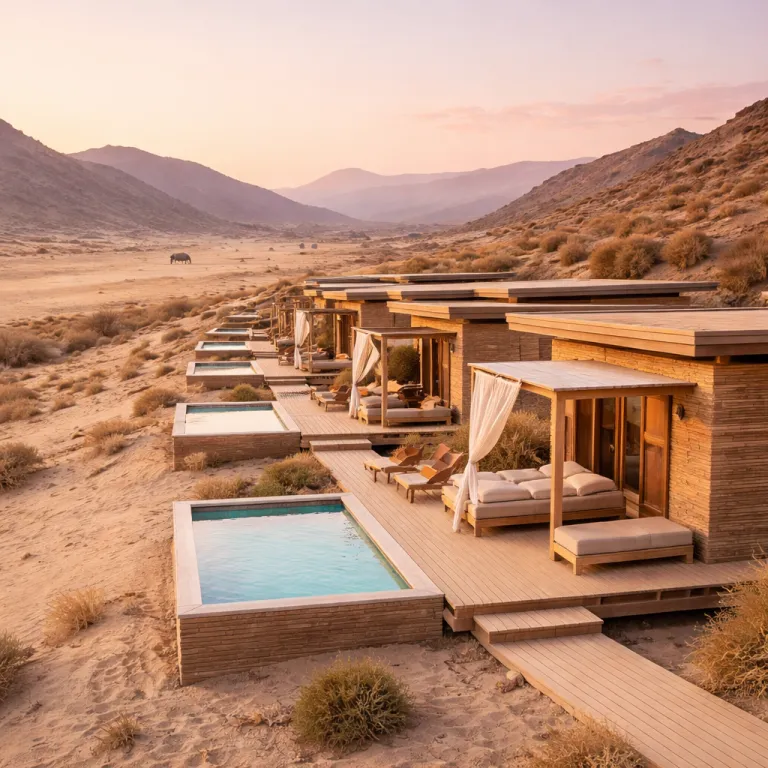
Hoanib elephant camp Namibia sets a new bar for remote sustainable luxury
Hoanib Elephant Camp Namibia opens in Kaokoland as a 12 suite desert retreat that treats remoteness as its greatest asset. The camp sits in the hoanib valley along the hoanib river, where desert adapted wildlife moves between the Skeleton Coast and inland dunes in one of the most sparsely populated corners of Africa. For travelers who click through endless options and read every detail before booking, this is the elephant camp that finally aligns serious conservation with high comfort.
The location is not a soft landing ; it is a deliberate step into a raw desert where adapted elephants, desert lion and desert elephants share the same dry riverbeds as the himba tribe and other local communities. From camp you look across a wide view of gravel plains that run for kilometres towards the coast, with the distant Skeleton Coast fog often visible as a pale band on the horizon. This is where the hoanib elephant and other adapted wildlife have learned to stretch scarce water for years, and where every human presence must be carefully adapted to avoid new human wildlife pressure.
Access to Hoanib Elephant Camp Namibia usually involves a light aircraft hop over the desert from Windhoek or another Namibian hub, which immediately underlines how isolated this hoanib valley project really is. Guests arrive to a low slung, solar powered camp whose canvas roofs and rammed earth walls are designed to sit quietly in the landscape rather than dominate it. The result is a property that feels more like a research outpost with a swimming pool and polished service than a conventional safari lodge, and that is precisely the point for couples who want their time in Namibia to fund real conservation projects.
Architecture, conservation projects and the reality of staying at hoanib elephant camp
The architecture brief at Hoanib Elephant Camp Namibia is unusually transparent about trade offs between comfort and footprint, and that honesty matters for guests who care where their money goes. Rammed earth walls provide thermal mass, while insulated canvas roofs reduce the need for mechanical cooling, and a fully solar powered system runs the camp’s essentials including the swimming pool pumps and limited charging stations. You feel the desert in the rooms during the heat of the day, but you also feel how the design has been adapted to work with the climate rather than fight it for years with diesel generators.
Programming is equally focused, with guided game drives, nature walks and cultural visits forming the backbone of each stay at this hoanib river camp. The official line from the team is clear : “What wildlife can be seen at Hoanib Elephant Camp? Desert-adapted elephants, lions, giraffes, and oryx.” Those desert adapted elephants and the occasional desert lion are not staged sightings ; they are part of a complex human wildlife story in which conservation projects must constantly manage wildlife conflict as elephants and giraffe move between the hoanib valley and nearby local communities.
Revenue from each guest night supports the Black Rhino Relocation Program and desert dwelling giraffe conservation, turning every couple’s stay into a measurable conservation project rather than a vague donation. Visits to the himba tribe are arranged through local conservancies, with low volume, pre agreed timings and clear guidelines on human interaction to avoid the staged performances that have plagued other parts of Namibia for years. For travelers planning a wider itinerary, pairing Hoanib Elephant Camp Namibia with an elegant stay in Windhoek for discerning travellers or a dune edge lodge near Sossusvlei, as outlined in our guide to luxury accommodation and unforgettable desert experiences, creates a coherent route that balances remote camp nights with easier logistics.
Who hoanib elephant camp Namibia is really for, and how to secure a suite
Hoanib Elephant Camp Namibia is not aimed at guests racing through a multi stop circuit ; it is built for couples and solo travelers willing to stay four or more nights and settle into the rhythm of the hoanib river. Long stays allow time for unhurried game drives that track desert elephant herds across several valleys, patient giraffe watching from dry riverbanks, and quiet afternoons by the swimming pool when the only movement is a line of adapted elephants crossing the far horizon. This is slow travel in one of Namibia’s most remote regions, where each human footprint is weighed against the needs of adapted wildlife that has survived here for years.
From a booking perspective, the reality is simple and unforgiving for planners who like to click and read before committing : twelve suites mean limited inventory, and the combination of conservation focus and Skeleton Coast proximity is already driving strong interest. Many couples are pairing hoanib elephant stays with time on Namibia’s Atlantic edge, using our guide to Namibia coast luxury stays along the Atlantic edge of the Namib desert to structure a coast and desert itinerary that respects travel time. If you want specific dates in peak dry season, especially when desert elephants and other wildlife concentrate along the hoanib river, you should treat this camp like a hard to get restaurant reservation in Africa and move early.
On the ground, the camp’s relationship with local communities is central to how it manages human wildlife dynamics in this fragile desert. Staff are hired from nearby settlements where possible, guiding teams are trained to handle wildlife conflict scenarios, and visits to the himba tribe are scheduled to avoid disrupting daily life rather than to maximise tourist throughput. For travelers who care about how their presence in Namibia affects both elephants and humans, Hoanib Elephant Camp Namibia stands as a reference point for what sustainable luxury in Kaokoland and along the Skeleton Coast now needs to mean.