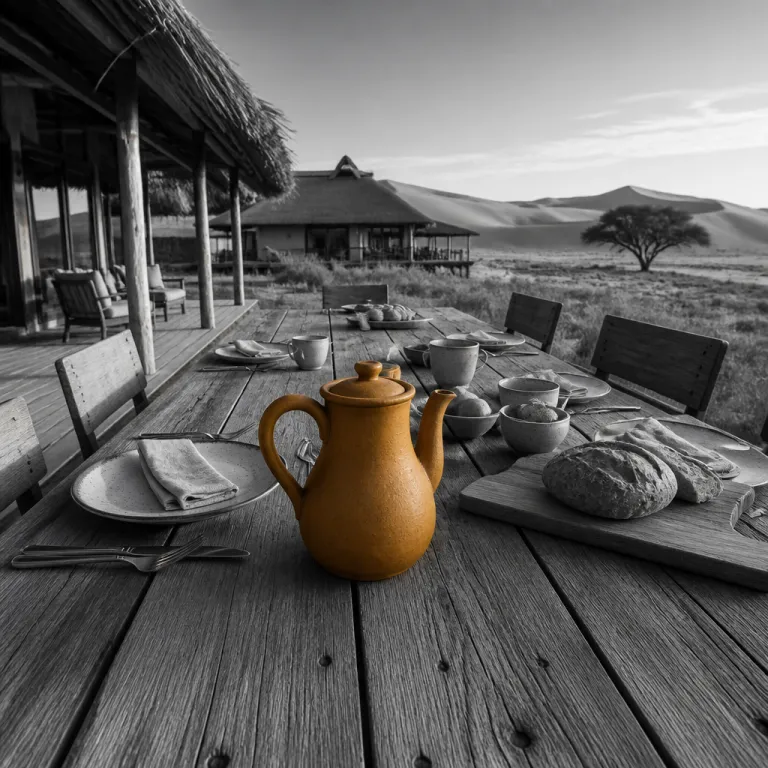
The 5:30 a.m. test at Namibian safari lodges
In Namibia, the first measure of namibia lodge breakfast dining quality happens long before sunrise. When your guide knocks at 5:15 a.m. for the game drive, what waits on the terrace or in the main lodge quietly signals the property’s ambition. A thoughtful camp will treat this pre dawn moment as part of the safari experience, not as a logistical hurdle.
At the best safari lodges in Namibia, the early spread is compact yet precise. You might find freshly ground coffee in a moka pot, rooibos tea, still warm muffins, and a small bowl of fruit that actually tastes of the national park rather than a distant cold store. Families heading out for a lodge safari appreciate when friendly staff remember children’s names and offer hot chocolate or porridge without being asked.
Contrast that with a lodge where the 5:30 a.m. test fails and the namibia lodge breakfast dining quality drops immediately. A chipped urn of instant coffee, dry rusks, and fluorescent juice tell you everything about how the accommodation views its guests and its place in nature. On a long game drive through a game reserve or nature reserve, that lack of care becomes very clear by mid morning.
Properties near Etosha National Park and the Etosha National area tend to understand this rhythm particularly well. They know that a family may spend five or six hours on game drives, scanning for desert adapted wildlife and listening to the guide explain the landscape. A well timed snack stop with proper coffee and a still warm pastry can turn a long day into a great safari experience for both adults and children.
In lodges Namibia wide, the most ambitious teams treat this early service as a quiet ritual. They dim the lodge lights, keep voices low, and let the sounds of wildlife carry across the reserve Namibia horizon. Parents notice when staff move efficiently yet gently, creating a sense of calm before the drive into nature.
From continental to cooked: why smaller camps often win breakfast
Once you return from the morning game drive, the second act of namibia lodge breakfast dining quality begins. Here the divide between large lodges and intimate camp properties becomes obvious in a single glance at the buffet or the à la carte menu. The question is simple ; does the kitchen cook for a headcount or for actual people.
In many big safari lodges, the continental breakfast leans heavily on volume. Trays of eggs sit under heat lamps, pastries lose their crispness, and fruit feels anonymous, as if it could be from any airport hotel far from Namibia. Smaller tented camp kitchens, by contrast, often have one chef who sends out eggs to order, pan toasted bread, and grilled tomatoes that still taste of the sun.
Local touches are the real test of ambition and of namibia lodge breakfast dining quality. When a lodge serves droëwors, boerewors, farm cheese from the Otavi area, or rooibos poached fruit, it is signalling that the game reserve around you is more than a backdrop. A thoughtful camp might offer a small game meat hash, explaining how it fits into local food traditions and how sourcing respects the surrounding nature reserve.
Families notice these details quickly, especially after several days of travel across Namibia. Children who have eaten the same cereal at three different lodges Namibia wide will remember the place that served pancakes with marula syrup or fresh bread baked in cast iron pots. Parents appreciate when staff explain which products come from nearby farms and which arrive from the Skeleton Coast or the oldest desert regions.
If you care about food, look for properties that talk openly about ingredients and dining options. Lodges that engage with desert adapted produce and regional suppliers tend to show that same care at lunch dinner and beyond. For a deeper sense of how chefs are using Namibian ingredients, read this analysis of desert ingredients in lodge kitchens, then compare it with what appears on your plate.
Coffee, timing and the quiet choreography of family mornings
Coffee is where namibia lodge breakfast dining quality often rises or collapses. In remote camp locations, some teams fly in fresh beans weekly and train staff to pull consistent espresso shots or manage a French press properly. Others still rely on instant coffee, which feels particularly harsh when you are watching the sun lift over a game reserve.
For families, timing matters as much as flavour. A lodge that understands parents will offer staggered breakfast slots, perhaps a quiet corner for couples returning from early game drives and a livelier area for children who have already been awake for hours. Some safari lodges even allow room service trays at dawn, so one adult can join the drive while the other stays back with a sleeping child.
On a well run lodge safari, the morning unfolds like a small piece of theatre. Friendly staff move between tables with an ease that suggests long practice, refilling coffee without hovering and checking subtly on dietary needs. When a guide joins briefly to plan the next day or to talk about rhino tracking in a nearby reserve Namibia area, the conversation feels natural rather than scripted.
Buffet lines can be challenging with younger guests, especially after a long night of travel. Properties that score highly on namibia lodge breakfast dining quality often assign one staff member to help families navigate options, carry plates, and keep things calm. That same attention to detail usually appears again at lunch dinner, when children are tired from game drives or from exploring the national park surroundings.
Evening meals get most of the attention in safari reviews, especially elaborate bush dinners under the stars. Yet the lodges that handle breakfast with grace tend to be the ones that also manage outdoor dinners, wine service, and logistics with quiet confidence ; you can see this pattern in many of the properties highlighted in this guide to bush dinners that get the details right. When a team can serve a perfect cappuccino at 6:30 a.m. and a well decanted red at 8:30 p.m., you know the operation is strong.
Reading a lodge’s ambition through its breakfast rituals
Breakfast is where a Namibian lodge quietly states its values. You see it in whether the property offers eco friendly choices, such as glass bottles for juice, composting coffee grounds, or limiting single use plastics at the buffet. You also see it in how the kitchen handles special requests without making guests feel like an inconvenience.
In safari lodges near Etosha National Park or in the wider Etosha National region, the best teams treat breakfast as part of the interpretive experience. Guides might stop by tables to explain how desert adapted species survive the dry season or to suggest the best time for rhino tracking later in the day. That blend of information and hospitality turns a simple meal into a continuation of the safari experience rather than a pause between game drives.
Along the Skeleton Coast, where fog rolls in from the Atlantic and the air feels almost cold by Namibian standards, namibia lodge breakfast dining quality takes on a different tone. Here a camp that offers hot oats with local honey, smoked fish, and strong coffee feels perfectly tuned to the landscape. Families returning from a bracing beach walk or a scenic drive along the dunes will remember that warmth long after the wildlife sightings blur together.
In the interior, properties such as those around Okonjima Nature Reserve show how breakfast can reflect a specific conservation story. A lodge that talks about its work with wildlife rehabilitation while serving eggs from its own hens or vegetables from a small garden is signalling a holistic approach. When staff can explain how the game reserve supports research and how tourism funds flow back into nature, the namibia lodge breakfast dining quality becomes part of a larger narrative.
For travellers comparing lodges Namibia wide, it helps to think of breakfast as a daily referendum on ambition. Does the lodge adjust meal times around long game drives, late night arrivals, or early departures, or does it insist on rigid schedules. The properties that flex thoughtfully around your family’s rhythm are usually the ones that will also handle unexpected changes in travel plans or wildlife sightings with grace.
How to choose a Namibian lodge when breakfast really matters
When you are booking accommodation in Namibia, very few websites talk honestly about breakfast. Yet for families planning a lodge safari, this is the meal that shapes every day, from the first coffee before sunrise to the last pastry before a mid morning swim. Paying attention to namibia lodge breakfast dining quality can help you separate marketing gloss from real hospitality.
Start by reading guest comments that mention early game drives, children, and dining options. Look for specific references to how the lodge handles pre drive snacks, whether staff are described as friendly, and whether anyone mentions instant coffee in a negative way. If a property near a nature reserve or game reserve receives repeated praise for flexible meal times and thoughtful kids’ plates, that is usually a reliable sign.
Next, consider how long you plan to stay in one place. For a slow week at a single lodge, breakfast variety becomes crucial, because repeating the same buffet for six or seven mornings can dull even the most dramatic wildlife sightings. Properties that build in rotating menus, occasional made to order specials, or picnic style game drives tend to keep both adults and children engaged ; you can see this slow stay philosophy explored in depth in this piece on why a slow week at one lodge can be transformative.
Families who care about eco friendly practices should ask direct questions before confirming a booking. Does the lodge source eggs, dairy, and produce locally, especially in regions near the oldest desert or in more fertile central areas. Are there options for lighter breakfasts on days with long drives between lodges Namibia wide, or for more substantial meals before intense activities such as rhino tracking.
Finally, remember that a great Namibian morning is about more than food. It is about how the lodge frames the day’s safari experience, how the guide sets expectations for wildlife, and how the staff read the energy of each table after a long night under unfamiliar stars. When all of those elements align, namibia lodge breakfast dining quality becomes the quiet highlight of your trip, even if the photos on your phone are all of lions and dunes.
FAQ
How early do breakfasts usually start at Namibian safari lodges ?
Most safari lodges in Namibia begin serving a light pre drive breakfast between 5:00 and 5:30 a.m. This early service usually includes coffee, tea, fruit, and simple baked items before guests leave for game drives. A fuller cooked breakfast is then offered after guests return from the morning safari experience.
Can families with young children get flexible breakfast times ?
Many family focused lodges offer flexible breakfast arrangements for guests with young children. Options can include room service trays, staggered seating times, or a small all day breakfast menu for early risers. When booking, ask specifically how the lodge handles children’s meals around game drive schedules.
Are vegetarian or special diet breakfasts easy to arrange in Namibia ?
Most higher end lodges in Namibia can accommodate vegetarian, vegan, or gluten free breakfasts with advance notice. Kitchens that already emphasise namibia lodge breakfast dining quality tend to handle special requests more confidently. It is best to share detailed dietary needs when you reserve, not only at check in.
What should I expect from coffee quality at remote camps ?
Coffee quality varies widely between remote camps and lodges. Some properties invest in espresso machines or high quality filter coffee, while others still rely on instant. If coffee matters to you, ask directly whether they use freshly ground beans and how they brew them for early game drives.
How does breakfast differ between Etosha and Skeleton Coast lodges ?
Lodges near Etosha National Park often focus on hearty cooked breakfasts to fuel long game drives in search of wildlife. Along the Skeleton Coast, breakfasts may lean towards warming dishes, smoked fish, and strong coffee to match the cooler coastal climate. In both regions, the most ambitious properties use breakfast to reflect their specific landscapes and conservation stories.