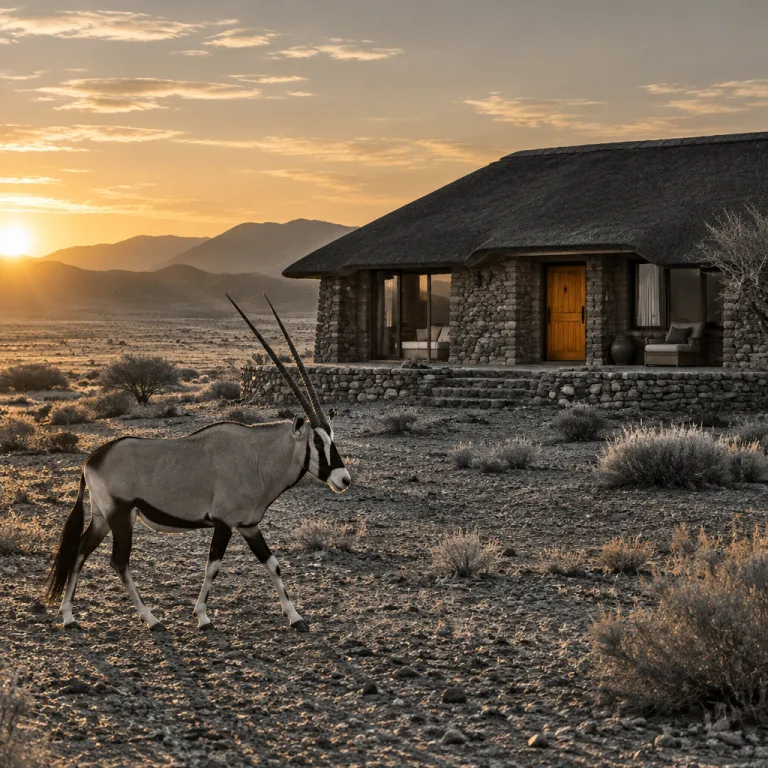
Why Namibrand Nature Reserve in Namibia defines desert luxury
Namibrand Nature Reserve in Namibia offers a rare blend of raw desert drama and polished hospitality. Within this vast private nature sanctuary, luxury lodges are carefully spaced across sandy plains, gravel plains, and plains dotted with inselbergs to protect fragile habitats and ensure deep privacy. Guests who read about safari destinations across Africa often single out this reserve in southern Namibia for its sense of space, silence, and sky.
Stretching over more than two thousand square kilometres, Namibrand sits along the west Namib transition zone where the Namib Desert meets the Nubib Mountains and the distant Namib Naukluft escarpment. This position between mountains with gravel slopes, rolling dunes, and open plains creates a layered landscape that feels cinematic yet surprisingly intimate. You move from ochre dunes to dark inselberg mountains and then to pale gravel plains within a single game drive, always with the immense Namib sky above.
For travellers comparing Namibrand Nature Reserve with a national park such as Etosha or the coastal Skeleton Coast National Park, the key difference is exclusivity. Visitor numbers are tightly controlled, fences have been removed to restore wildlife movement, and conservation rather than volume tourism funds the area’s future. This model of private nature reserves in southern Africa allows you to experience wildlife and desert scenery with almost no vehicle traffic, which is especially appealing for honeymooners and high end photographers.
Reading the landscape: dunes, plains and mountains in Namibrand
Understanding the habitats of Namibrand Nature Reserve in Namibia helps you choose the right lodge and activities. The reserve’s four main ecosystems are dunes and sandy plains, inselbergs and mountains, gravel plains, and the subtle sand gravel interface that links them. Each of these nature zones hosts different wildlife, so where you sleep shapes what you see at sunrise and under the dark sky at night.
On the eastern side, long linear dunes and wide sandy plains echo the nearby Namib Desert and the famous Sossusvlei area of the Namib Naukluft region. Here, lodges often face west toward the setting sun, giving you front row views of glowing dunes and a sky reserve quality horizon that seems to stretch into the rest of southern Africa. In the central belt, mountains with gravel fans and rugged inselberg peaks rise from the plains, creating dramatic backdrops for sundowner drives and guided walks.
Further west, the landscape softens into wide gravel plains that form part of the greater west Namib ecosystem and link towards the Skeleton Coast National Park. If you are planning a longer itinerary, pairing a stay here with refined stays along Namibia’s Skeleton Coast allows you to experience both inland desert silence and Atlantic fog cooled shores in one journey. Across all these zones, the Namibrand reserve has removed internal fences so wildlife can move naturally between plains, dunes, and mountains, which is crucial for long term conservation.
Stargazing and the International Dark Sky status
Namibrand Nature Reserve in Namibia is widely recognised as one of the darkest places on Earth that still offers high end accommodation. The International Dark-Sky Association (IDA) has formally designated the area as Africa’s first Gold Tier International Dark Sky Reserve, highlighting how exceptional the night sky here is. For travellers, that means you can step from a heated plunge pool or wine cellar onto your deck and see the Milky Way arching over the Namib landscape without any intrusive artificial light.
This international dark sky status is not a marketing phrase but a conservation commitment that shapes how lodges operate across the Namib desert reserve. Outdoor lighting is shielded and minimal, room design favours low intensity warm tones, and staff are trained to protect the dark sky as carefully as they protect wildlife. Many properties provide telescopes, star maps, and guided astronomy sessions that explain how the southern sky guided early travellers across the Namib Desert and the wider southern Africa region.
Because Namibrand lies far from any national park town or major highway, the sky reserve quality is rarely disturbed by passing traffic or settlements. Guests are encouraged to bring layered clothing for cold nights, stay at least two nights, and read the constellations with expert guides who link them to local stories and navigation traditions. If you are combining this stay with other stargazing destinations, consider Sossusvlei Desert Lodge, with refined desert suites and stargazing luxury in Namibia, for a complementary perspective on the Namib Naukluft night sky.
Wildlife, conservation and quiet luxury in Namibrand
Although the Namibrand Nature Reserve is dominated by desert scenery, it supports a surprisingly rich range of wildlife. More than sixty five mammal species have been recorded, including springbok, oryx, bat eared foxes, and an increasing presence of predators as conservation efforts mature. Birdlife is equally rewarding, with raptors riding thermals above mountains with gravel slopes and larks and coursers adapted to the gravel plains and sandy plains.
The reserve was created by merging former livestock farms and removing internal fences so that wildlife could move freely between dunes, plains, and inselberg mountains. Over time, this private nature initiative has allowed populations of plains game to rebound and has supported careful reintroductions of predators, guided by research collaborations and camera trap data. The NamibRand Conservation Foundation manages the nature reserve with a clear mandate to balance tourism revenue, biodiversity protection, and the preservation of the dark sky environment.
Partnerships with organisations such as Quiet Parks International and Vultures Namibia underline how seriously this landscape takes silence and ecological integrity. Lodges limit vehicle numbers, favour low impact activities like guided walks and e biking, and design architecture that blends into the Namib landscape rather than dominating it. For guests, that translates into quiet luxury where you can read on your deck, listen to the wind over the dunes, and feel part of a wider conservation story that stretches across southern Namibia and into neighbouring nature reserves.
Choosing and booking luxury lodges in Namibrand
Selecting the right lodge in Namibrand Nature Reserve starts with clarifying what kind of experience you value most. Some properties focus on immersive desert activities, with guided walks across sandy plains, scenic drives to the edge of the Namib Desert, and photographic safaris on the gravel plains. Others emphasise wellness, with spa treatments, private plunge pools, and suites positioned for uninterrupted views of the dark sky and the distant Nubib Mountains.
When you read lodge descriptions, pay attention to how many suites they offer and how they manage access to key viewpoints across the Namibrand reserve. Smaller properties often provide a more exclusive feel, with private nature drives that can be tailored to your interests, whether that is tracking wildlife on the plains and inselbergs or exploring the mountains gravel interface where geology and ecology meet. Ask specifically about their conservation contributions, such as levies to the NamibRand Conservation Foundation or support for local education initiatives like the NaDEET environmental education centre.
For travellers planning a broader African journey, it can be helpful to compare Namibrand with other high end wilderness destinations such as the opulent safari retreats around Ngorongoro Crater in Tanzania. Reading an in depth review of an opulent safari retreat on the crater rim can clarify how crater based wildlife viewing differs from the open desert and sky reserve experience in southern Namibia. A specialist booking platform focused on Namibia will understand these nuances and can match you with lodges that align with your expectations for service, privacy, and access to both the Namib Naukluft region and nearby national park gateways.
Planning your Namibrand itinerary within Namibia and southern Africa
Building an itinerary around Namibrand Nature Reserve works best when you consider travel distances and contrasting landscapes. The reserve lies near Sossusvlei on the eastern edge of the Namib Desert, so many travellers pair it with time in the Naukluft National section of the Namib Naukluft area or with coastal stays further west. This combination lets you experience towering dunes, rugged mountains with gravel slopes, and the cool Atlantic coast within a single journey across southern Namibia.
One classic route links Windhoek to Sossusvlei, then continues south through the Namibrand Nature Reserve before turning west towards the Skeleton Coast and then north to other national park areas. Along the way, you move through different nature reserves and private nature conservancies, each with its own approach to conservation and guest experience. Flying by light aircraft shortens travel times and gives you a spectacular aerial read of the Namib landscape, from sandy plains and dunes to gravel plains and isolated inselberg mountains.
Because lodge capacity in the Namibrand reserve is limited by design, advance booking is essential, especially during the cooler, clearer months when the dark sky is at its most transparent. Plan for at least two or three nights here so you can balance daytime wildlife activities with unhurried evenings under the international dark sky canopy. If you are combining multiple destinations across Africa, work with a specialist who understands both logistics and conservation priorities, ensuring your trip supports the long term protection of this remarkable nature reserve and its surrounding plains and mountains.
Key figures and conservation statistics for Namibrand
- Namibrand Nature Reserve covers about 202,200 hectares, which equals roughly 2,022 square kilometres of protected Namib Desert and plains habitat according to official reports from the NamibRand Nature Reserve and the International Dark-Sky Association.
- More than 65 mammal species have been recorded within the reserve, reflecting a strong rebound in wildlife populations since livestock farming ceased and fences were removed.
- The area was recognised as a Gold Tier International Dark Sky Reserve by the International Dark-Sky Association, making it the first such designation in Africa and placing it among a small group of elite sky reserves worldwide.
- The reserve was assembled from around 16 former farms, demonstrating how private nature initiatives can convert overgrazed land into a coherent conservation landscape that links dunes, gravel plains, and mountains.
- Visitor guidelines recommend staying at least two nights to fully experience both daytime wildlife viewing and the dark sky conditions, which are among the clearest in southern Africa.
FAQ about Namibrand Nature Reserve Namibia
How large is Namibrand Nature Reserve and where is it located ?
Namibrand Nature Reserve covers about 202,200 hectares, or roughly 2,022 square kilometres, in southwest Namibia near Sossusvlei on the eastern edge of the Namib Desert. It lies within the broader Namib Naukluft region, bordered by gravel plains, sandy plains, and the Nubib Mountains. Access is usually by light aircraft or a long scenic drive from Windhoek or other national park gateways.
What makes the night sky in Namibrand so special for travellers ?
The reserve has been certified as a Gold Tier International Dark Sky Reserve by the International Dark-Sky Association, meaning artificial light is extremely limited and the Milky Way is visible with exceptional clarity. Lodges use shielded, low intensity lighting and are far from towns, so there is almost no light pollution. For guests, this creates some of the best stargazing conditions in southern Africa, especially during the dry winter months.
What types of habitats and landscapes will I see in Namibrand ?
Travellers encounter four main habitat types in Namibrand Nature Reserve: dunes and sandy plains, inselbergs and mountains, gravel plains, and the sand gravel interface that links them. This mix of plains, dunes, and mountains with gravel slopes creates a visually rich Namib landscape that changes dramatically with the light. Wildlife has adapted to each zone, so game drives often move between habitats to maximise sightings.
How does Namibrand balance luxury tourism with conservation goals ?
The Namibrand reserve operates as a private nature conservation area where tourism revenue funds habitat protection, research, and community education. Lodges are limited in number, vehicle density is controlled, and conservation levies support the NamibRand Conservation Foundation and partners such as Quiet Parks International and NaDEET. This model allows guests to enjoy high end comfort while directly contributing to long term protection of the Namib Desert ecosystem.
When is the best time to visit Namibrand for wildlife and stargazing ?
The cooler, drier months from roughly May to September usually offer the clearest dark sky conditions and comfortable daytime temperatures for activities. Wildlife viewing is strong year round, but during these months animals often concentrate around limited water sources on the plains and in the mountains. Regardless of season, visitors should bring layered clothing for cold nights and plan at least two nights to fully enjoy both wildlife and the international dark sky experience.