Reading the landscape: what you are really seeing at deadvlei
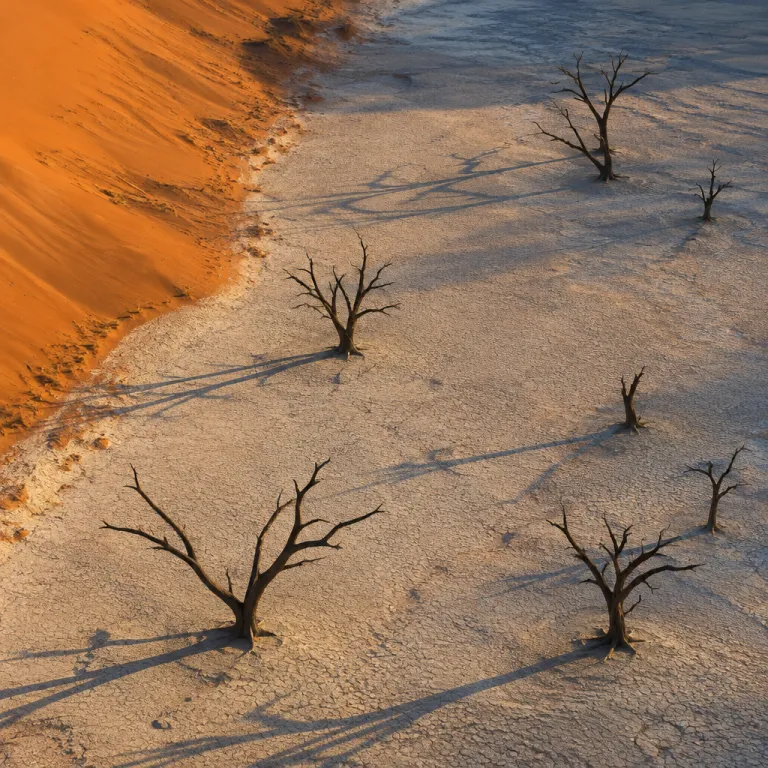
Stand on the edge of Deadvlei and the scene feels unreal. The famous dead trees Namibia visitors photograph are camel thorn skeletons rising from a white clay pan, framed by towering red dunes of the Namib Desert. Children often fall silent here, because the contrast between black trees, white clay and orange sand looks more like digital images than a real place in the heart of Sossusvlei.
This part of the Namib Naukluft landscape was once a shallow wetland, a vlei where an ancient pan formed after the Tsauchab River flooded and spread an abundance of water across the desert floor. In that wetter era, camel thorn trees and other thorn trees grew in clusters, their roots tapping into the river water that lingered in the clay pan long after the surface looked dry. Families walking across the pan today are literally crossing an old river bed that climate changed from oasis to fossilised memory in this corner of park Namibia.
Over hundreds of years the dunes shifted, the river flooded less often and the area dry cycle lengthened until the Tsauchab River was blocked completely by sand dunes. With no more water, the trees died and the vlei became Dead Vlei, a national park showpiece where the wood never rots because the Namib Desert air is so arid. The trunks of these dead trees have stood for many years, preserved by the hardened white clay and the extreme lack of moisture in this part of Namib Naukluft National Park.
How the pan formed: a simple story for curious minds
To understand Deadvlei properly, imagine the Namib as a slow moving ocean of sand. When the Tsauchab River flooded in the past, it spilled into a low lying area and a shallow pan formed, trapping water above a layer of impermeable clay. That trapped water turned the desert into a temporary wetland, and camel thorn trees spread across the area because their roots could reach the underground water table even when the surface looked dry.
Over many years the surrounding dunes crept forward, grain by grain, until they cut off the river and the pan lost its supply of water. Without that abundance of water the trees died, the area dry cycle became permanent and the vlei shifted from living wetland to dead pan, now known worldwide for its stark dead trees and cracked clay pan. The wood did not turn to stone, but the combination of hard white clay underfoot and hyper arid Namib Desert air stopped fungi and insects from breaking the trunks down.
Parents can turn this into a simple field lesson by asking children to picture how a river flooded landscape can become a desert over hundreds of years. Point out the high water line where the Tsauchab River once flowed, then trace the curve of the dunes that now block the river and protect the pan. From there, walk across the clay pan and let them feel how the surface shifts from soft sand to firm clay, a tactile way to explain how climate changed the national park from wetland to dry fossil forest. For planning your wider route through Namibia, pair this with a refined city stay in Windhoek before you head into the Namib Naukluft wilderness.
Light, timing and the walk in: experiencing deadvlei beyond the crowds
The walk from the 4x4 parking area to Deadvlei takes around twenty to thirty minutes at a family pace. You cross soft sand and low dunes, then suddenly the white clay pan appears, ringed by some of the highest sand dunes in the Namib Naukluft National Park. Children usually forget the effort the moment they see the first dead trees standing like sculptures against the dunes.
Most visitors arrive in the harsh middle of the day, when the sun flattens the view and the pan can feel like a crowded outdoor studio for social media images. Aim instead for first light or the late afternoon window, when the sun is low and the red sand dunes behind Dead Vlei glow while the pan remains in shadow. This side lighting carves every ripple of sand and every crack in the white clay into sharp relief, and the silhouettes of the trees look almost three dimensional to the naked eye.
Families with older children can add a climb up Big Daddy, the giant dune that looms over the pan and offers a sweeping view of the Namib Desert and the Tsauchab River valley. From the ridge you see how the river once curved through this area before the dunes sealed it off, and how the pan formed in a shallow basin now completely cut off from flowing water. When you plan your route back toward the capital, consider pairing this wild silence with a night or two in one of the refined Windhoek city hotels that understand sandy boots, sleepy children and late check ins after long drives.
Choosing the right lodge: where luxury earns its place near sossusvlei
Luxury near Sossusvlei is not about marble lobbies, it is about location and timing. The best properties in this part of park Namibia offer private gates into the Namib Naukluft National Park or early access permits, which means you can reach Deadvlei before the main convoy of vehicles. For families, that quiet hour with the dead trees and the clay pan almost to yourselves is worth more than any spa treatment.
Look for lodges that orient their rooms toward the dunes and the Tsauchab River valley, so you can watch the first light slide down the sand dunes from your terrace. Some properties offer guided walks that explain how the pan formed, why the area dry cycle has lasted so many years and how the trees died when the river flooded less often and finally stopped. A good guide will point out the camel thorn and other thorn trees still growing along the river course outside the pan, using them to show children how much abundance of water is needed to keep a tree alive in the Namib Desert.
Families who value conservation can also combine a Sossusvlei stay with time on the Skeleton Coast, where the same desert system meets the Atlantic. In both areas, the real luxury is access to informed guides who can translate geology, climate and ecology into stories that keep children engaged long after the drive back to the lodge.
Making the science tangible for families and photographers
Parents often arrive at Deadvlei with a shot list, but the place works best as an open air classroom. Start by asking children why the dead trees are still standing after so many years, then let them test the clay pan with their feet and hands. Explain that the wood has not turned to stone, it is simply preserved because the climate changed from a wetter phase with regular river flooded events to an ultra dry phase with almost no water.
For photographers, the key is patience rather than filters, because the raw ingredients are already perfect. Early and late light emphasises the contrast between the white clay, the orange dunes and the black silhouettes of the trees Deadvlei is known for, while midday sun tends to bleach the pan and flatten the view. Move slowly through the area, respecting other visitors, and look for angles where a single camel thorn trunk lines up with the curve of a dune or where a cluster of thorn trees frames the distant ridge of Big Daddy.
Families can turn the return walk into a recap, asking children to retell how the pan formed when the Tsauchab River once brought an abundance of water into this corner of the Namib. Encourage them to compare the living trees along the river course with the dead trees in the pan, reinforcing the link between water, life and the way climate changed the Namib Desert over hundreds of years. Back at your lodge, scroll through your images together and let each child choose a favourite, then note whether it was the science story, the national park silence or the sheer scale of the dunes that made the moment unforgettable.
FAQ
Why do the trees in deadvlei not rot like normal wood ?
The dead trees in Deadvlei do not rot because the Namib Desert climate is extremely dry and the hardened white clay pan holds the trunks firmly in place. Fungi and insects that usually break down wood need more moisture than this area provides, so the trees died but their skeletons remain. The result is a natural open air gallery of preserved camel thorn trunks that have stood for many years without decomposing.
How old are the dead trees in deadvlei and when did they die ?
The camel thorn trees in Deadvlei are commonly cited as being around 900 years old, and the standing skeletons are believed to have died roughly 600 to 700 years ago, based on radiocarbon dating reported by Namibian park researchers. They grew during a wetter period when the Tsauchab River flooded more often and brought water into the pan. Once the dunes blocked the river and the area dry cycle became permanent, the trees died and the pan turned into the fossil forest seen today.
Is the pan in deadvlei still connected to the Tsauchab River ?
Today the clay pan of Deadvlei is cut off from the active course of the Tsauchab River by high sand dunes. The pan formed when the river flooded in the past, but shifting dunes in the Namib Naukluft National Park eventually blocked the flow. As a result, no fresh water reaches the pan and the vlei remains completely dry most of the time.
Can families with children comfortably walk to deadvlei from the parking area ?
Most families with school age children can manage the walk from the 4x4 parking area to Deadvlei in about twenty to thirty minutes. The route crosses soft sand and small dunes, so it feels longer in the heat, but there are no steep climbs. Carry enough water, sun protection and snacks, and plan your visit for early morning or late afternoon to avoid the harshest desert temperatures.
What is the best time of day to photograph deadvlei’s trees and dunes ?
The most atmospheric light at Deadvlei usually comes just after sunrise and in the late afternoon, when the sun is low and the dunes glow while the pan remains in partial shadow. This side lighting emphasises the texture of the white clay and the sharp silhouettes of the dead trees against the orange sand. Midday visits are still impressive, but the contrast is softer and the pan can feel busier with tour groups.