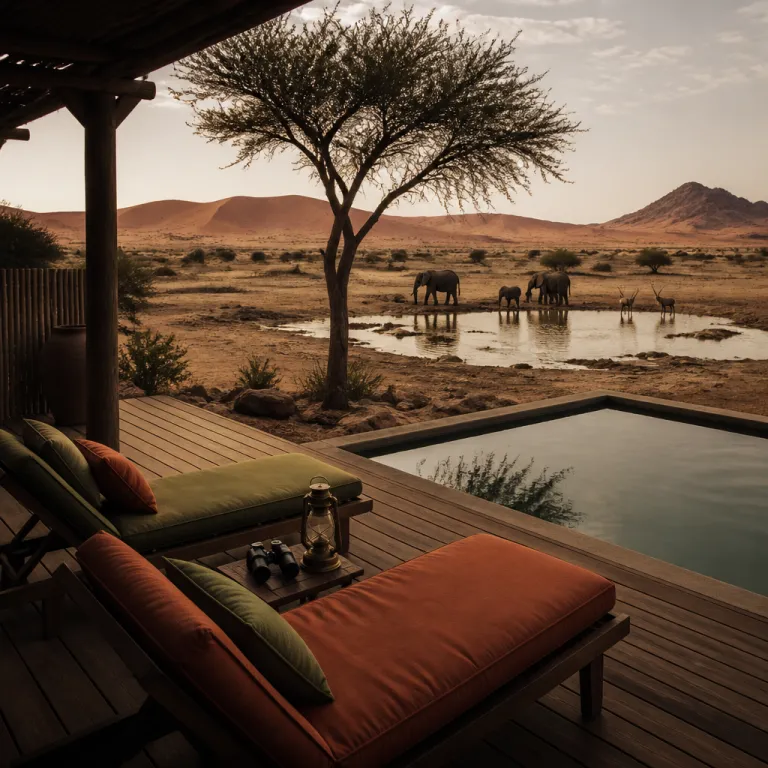
How the seasons in Namibia shape luxury travel
The best time to visit Namibia depends on how you balance comfort, wildlife and crowd levels. During the long dry season Namibia offers clear skies, cool nights and some of Africa’s most reliable wildlife viewing conditions for guests in premium lodges. Understanding each season in Namibia helps you choose the right time of year for your style of journey.
From May to October the dry season in Namibia brings average daytime temperatures of about 24 °C, with nights dropping near 10 °C in many safari regions, which suits travellers who prefer crisp evenings and warm but not oppressive days. According to long-term climate summaries from the Namibia Meteorological Service (for example, the Climate of Namibia overview and annual rainfall bulletins), these cooler, low-rainfall months coincide with the most dependable wildlife viewing, because animals concentrate around permanent water sources and luxury camps near Etosha National Park, the Namib Desert and the Kunene River can plan highly predictable drives. When you plan your time to visit, remember that June, July, August and September are also peak months for international travellers, and park statistics published by the Ministry of Environment, Forestry and Tourism show that Etosha’s visitor numbers typically crest in this period, so premium suites at sought-after lodges such as Ongava Lodge, Onguma The Fort or Little Ongava often sell out many days or even months in advance.
From November to April the rainy season in Namibia transforms the desert into a softer, greener landscape, and this period offers a very different but equally compelling way to visit Namibia in style. Daytime temperatures in the wet season often reach around 30 °C, so luxury hotels with shaded pools, air-conditioned suites and attentive service become more than a treat, they become essential for comfortable travelling in Namibia. For many guests the best time of year is actually the shoulder period from April to October, when some early or late rains add colour to the desert while game viewing remains excellent and premium properties may offer more flexible price structures.
Dry season versus rainy season for Etosha and other national parks
For Etosha National Park and other flagship reserves, the best time to visit Namibia is usually the heart of the dry season from June to September. During this time wildlife congregates at the pans and pumped water sources, so game viewing in Etosha becomes almost theatrical, with elephants, lions and antelope sharing the same stage in front of luxury camp decks. If your dream is viewing Etosha from a private vehicle with an expert guide, this is the season when each game drive delivers consistently excellent sightings.
Between April and October, especially in late August, September and early October, the landscape around Etosha National Park is stark and clear, which makes it easier to spot wildlife from a distance and to photograph game against pale horizons. Many high-end lodges use this time of year to offer extended morning and late afternoon drives, because the cooler air allows guests to stay out longer without discomfort, and the low humidity keeps horizons sharp. When you compare the dry season with the rainy season, remember that the lowest rainfall also means more dust, so choosing a premium property with enclosed vehicles and quality guiding can significantly improve your overall Namibia safari experience.
From November to April, the rainy season in Namibia brings dramatic skies, newborn animals and lush grass, which changes the rhythm of a Namibia safari but does not remove its appeal. This November to April window is sometimes called the emerald season, and it can be the best time to visit Namibia for travellers who value tranquillity, birdlife and more attractive price points at luxury hotels. Before you commit, read a detailed assessment of how different lodges perform in each season in Namibia through a specialist resource on hotel reviews in Namibia and what expert inspectors actually assess.
Planning a luxury Namibia safari by month and region
When you plan the best time to visit Namibia, it helps to think month by month and match each region to your expectations for weather, wildlife and style of stay. From April to October, the classic Namibia safaris that combine Windhoek, Etosha National Park and the Namib Desert run with very predictable conditions, which suits travellers who want to secure high-value suites and plan flights and transfers many months ahead. In contrast, the period from October to November and again from March to April can be ideal for flexible guests who enjoy a touch of drama in the skies and slightly lower occupancy at premium properties.
April is often an excellent month for a Namibia safari that blends wildlife and scenery, because the last showers of the rainy season in Namibia leave the landscapes fresh while roads remain accessible for luxury vehicles. From May and June onwards, the dry season tightens its grip, and this is the best time of year for guests who want to focus on game viewing in Etosha and other national parks without worrying about sudden storms disrupting their days. By October, heat builds in the north and east, so many high-end travellers either shift their time to visit towards the cooler coastal desert or choose properties with strong sustainability credentials and thoughtful architectural design that keeps suites naturally cool.
From November, the first storms usually arrive, marking the start of the season November to April, when travelling in Namibia becomes more about atmosphere and less about ticking off every species in a field guide. This November–April period can be the best time to visit Namibia for photographers who love dramatic clouds over the desert and for wellness-focused guests who value quieter lodges and more personalised service. If you are considering a wider circuit that includes neighbouring countries, you can pair your adventure in Namibia with an exclusive retreat such as the Victoria Falls Safari Club, described in depth in this feature on an exclusive luxury safari retreat near Victoria Falls.
Aligning luxury hotel choices with climate, wellness and budget
For many guests the best time to visit Namibia is when climate, wellness and budget align with their expectations for a once-in-a-lifetime journey. During the peak dry season, especially from June to September, the price of premium suites in Etosha National Park and the Namib Desert tends to be at its highest, reflecting strong demand for the best game viewing and the lowest risk of rain. Travellers paying in USD often find that booking well ahead and staying slightly outside the absolute peak days around public holidays can secure more favourable price levels without compromising on quality.
In the shoulder months of April and October, some luxury properties in Namibia quietly adjust their price structures, offering added value such as complimentary spa treatments, private game drives or longer stays for the same overall budget. This can make April–October a particularly attractive time to visit Namibia for couples or families who want the full dry season experience but prefer a calmer atmosphere and more space at the pool or on the vehicle. When you plan your time to visit, consider how many days you want in each region, because a well-balanced itinerary can reduce internal flight costs and free more of your USD budget for exceptional guiding and unique experiences.
Wellness-focused travellers often choose the early or late rainy season in Namibia, when temperatures are warmer but the air feels softer and desert landscapes carry a subtle scent after showers. During this time of year, some high-end lodges emphasise wellness programmes, sound journeys and spa rituals that complement the natural rhythm of the desert, as explored in this report on sound healing and new lodge wellness programmes in the Namib. Whether you travel in the dry season or the rainy season, choosing properties with strong sustainability practices and genuine partnerships with local communities helps ensure that your Namibia safari supports both conservation and cultural resilience.
Windhoek, desert coasts and remote regions throughout the year
Windhoek, the capital of Namibia, sits in the Khomas Highlands and often serves as the first and last stop for luxury travellers. During the dry season, clear skies and mild daytime temperatures make Windhoek an excellent base for a night or two in a premium city hotel before or after your Namibia safari, allowing time to adjust to the time zone and enjoy fine dining. In the rainy season, brief afternoon storms can roll over the surrounding hills, but the city’s infrastructure and high-quality accommodations ensure that travel remains smooth.
Along the Atlantic coast, destinations such as Swakopmund and Walvis Bay experience cooler conditions than the interior, which can influence your decision about the best time to visit Namibia. Many guests choose to escape the heat of October and November in the interior by spending several days in coastal luxury hotels, where fog banks keep temperatures moderate and adventure in Namibia takes the form of dune drives, marine cruises and desert-adapted wildlife excursions. During the November–April period, the contrast between the warm inland air and the cool Benguela Current can create atmospheric mornings, which photographers and wellness travellers often find inspiring.
In more remote regions, such as Damaraland and the Kunene River area, the time of year has a strong impact on both access and experience. During the heart of the dry season, these areas offer some of the best time windows for tracking desert-adapted elephants and rhinos, while luxury camps rely on carefully managed water sources to support both wildlife and guest comfort. In the rainy season, some tracks can become challenging, so high-end operators adjust their Namibia safaris to use aircraft or more robust vehicles, ensuring that travelling in Namibia remains safe, efficient and deeply rewarding.
Practical planning tips for premium stays and safaris
Choosing the best time to visit Namibia is only the first step in planning a seamless luxury journey. Once you have decided whether the dry season or the rainy season suits you better, work with experienced tour operators and accommodation providers who understand how each time of year affects flight schedules, road conditions and wildlife behaviour. Many high-end travellers now use virtual reality previews of lodges and national parks to refine their choices before committing significant USD budgets.
When you plan your Namibia safari, allow at least three to four days in Etosha National Park or its private reserves, because this gives you enough time to experience different areas and maximise game viewing opportunities. Add several days in the Namib Desert for contrast, where clear night skies, sculpted dunes and remote luxury camps such as “Sossusvlei Desert Lodge” or “Little Kulala” create a very different rhythm from the wildlife-rich north. For many guests, a total of ten to fourteen days in Namibia offers the best balance between depth and variety, especially when travelling in Namibia involves internal flights between Windhoek, Etosha and the coast.
Pack layers for varying temperatures, because even in the dry season mornings on open vehicles can feel cold while midday sun in the desert remains strong. Book accommodations early during peak season, as premium suites near key water sources and prime game viewing areas are limited and the best options often sell out quickly. Stay hydrated, use sun protection and remember that “June to September are ideal months due to cooler temperatures and excellent wildlife viewing.”
Key figures for choosing the best time to visit Namibia
- Average daytime temperatures in the dry season sit around 24 °C, which offers comfortable conditions for long game drives and walking activities in major national parks such as Etosha.
- Average nighttime temperatures in the dry season drop to about 10 °C, so luxury lodges often provide heated blankets and hot water bottles for early morning departures.
- Average daytime temperatures in the wet season reach roughly 30 °C, making air-conditioned suites, shaded pools and flexible activity schedules especially valuable for premium travellers.
- The dry months from May to October typically offer the lowest rainfall, which concentrates wildlife at water sources and creates some of the best game viewing conditions in southern Africa.
- Many high-end travellers allocate ten to fourteen days for a Namibia safari circuit, balancing time in Etosha National Park, the Namib Desert and Windhoek to maximise both comfort and variety.
FAQ about the best time to visit Namibia for luxury stays
What is the best month to visit Namibia for a luxury safari ?
For classic wildlife-focused luxury safaris, June to September are often considered the best months, because temperatures are cooler, vegetation is sparse and game viewing around water sources in Etosha National Park and other reserves is consistently strong. These months fall in the heart of the dry season, so rain is unlikely to disrupt flights or activities. Premium lodges are in high demand then, so advance booking is essential.
Is Namibia safe for high end tourists ?
Namibia is generally safe for tourists, including those staying in luxury and premium properties, as long as standard travel precautions are followed. High-end lodges and hotels typically have strong security protocols, trained staff and reliable vehicles for transfers and game drives. In cities such as Windhoek, using reputable transport services and being aware of your surroundings is usually sufficient.
Do I need a visa to visit Namibia for a luxury holiday ?
Visa requirements for Namibia depend on your nationality, not on the level of accommodation you choose. Many travellers from Europe and parts of North America receive visas on arrival, while others must apply in advance through a Namibian embassy or consulate. Always check the latest entry regulations with official government sources before confirming non-refundable hotel or flight bookings.
How far in advance should I book luxury hotels in Namibia ?
For peak dry season travel between June and September, it is wise to secure premium lodges and key suites at least nine to twelve months ahead, especially for Etosha National Park and the Namib Desert. Shoulder months such as April, May and October may offer more flexibility, but top properties can still fill quickly around holidays. For rainy season stays, three to six months of lead time is often sufficient, though early planning still helps with securing preferred room categories.
Is the rainy season a good time for a wellness focused trip ?
The rainy season from November to April can be an excellent time for wellness-oriented luxury travel in Namibia, because lodges are quieter, landscapes are greener and temperatures support slower, more reflective days. Many high-end properties use this period to highlight spa treatments, sound journeys and personalised wellness programmes that pair well with softer light and dramatic skies. Wildlife viewing can still be rewarding, especially for birdlife and newborn animals, though sightings may be less concentrated than in the dry season.
