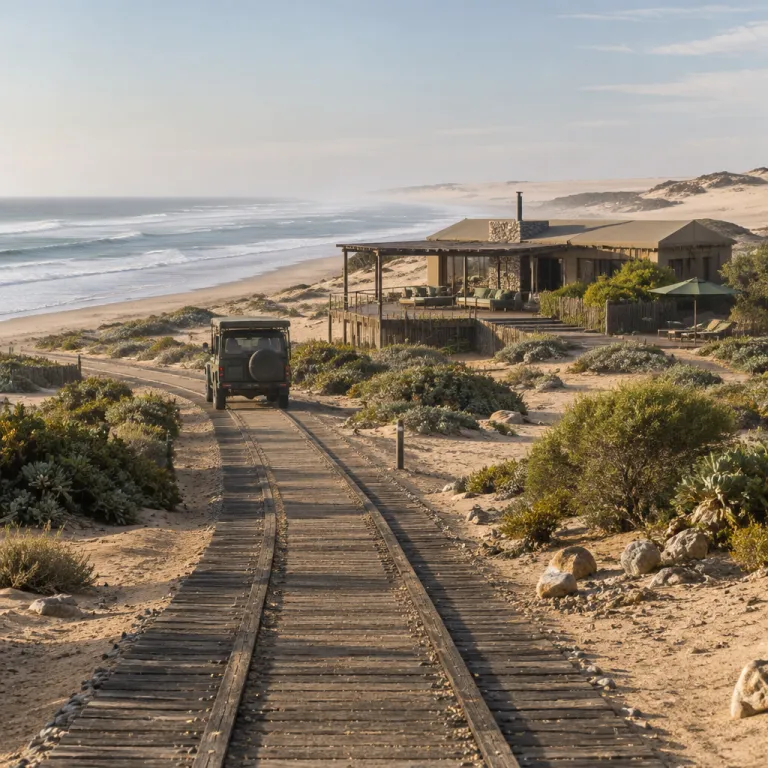
Why Skeleton Coast National Park defines Namibia’s wild luxury
Skeleton Coast National Park stretches for about 500 km along a stark Atlantic coastline in north-western Namibia. This protected national game park covers roughly 16,845 km² between the Ugab River in the south and the Kunene River in the north, creating one of the most remote luxury frontiers in the country. Here the Namib Desert meets the ocean in a swirl of fog, gravel plains, and shipwrecks, and every carefully placed lodge or coastal camp must be desert-adapted to survive.
The Namibian Ministry of Environment, Forestry and Tourism manages the park as a strictly controlled conservation area. Their objectives are clear and ambitious, as they aim to conserve desert–coastal ecosystems, protect wildlife including desert-adapted mammals, preserve fog-dependent flora, and regulate tourism and fishing. For luxury travellers this means that every visit to the Skeleton Coast or to any national park concession is shaped by permits, limited beds, and guided drives that protect both the coastline and the wildlife.
There is no city inside the park, only a handful of government rest camps at Terrace Bay and Torra Bay and a few high-end concessions such as Shipwreck Lodge and Hoanib Skeleton Coast Camp. These properties sit within vast gravel plains and dunes, where desert-adapted elephants and lions move between ephemeral river systems. When you book a premium lodge in this part of Namibia, you are paying not only for comfort but also for access to a coastline that remains largely untouched and for expert guiding that interprets every skeleton, dune, and bay.
Planning a luxury visit to the southern Skeleton Coast from Swakopmund
Most travellers start their journey to Skeleton Coast National Park from Swakopmund, the relaxed seaside town that serves as a logistical hub. From Swakopmund the southern section of the park is reachable by 4WD along the salt road that runs past Henties Bay towards the Ugabmund Gate. This southern coastline offers the most accessible way to visit the Skeleton Coast on a self-drive while still enjoying premium hotels and lodges in town.
Swakopmund itself hosts some of the best luxury properties in Namibia, with ocean-facing rooms, refined dining, and easy access to desert activities. Many guests combine a night or two here with a guided day drive north to Cape Cross, where tens of thousands of Cape fur seals crowd the rocks in a noisy spectacle. From this base you can also arrange scenic flights over the national park, tracing the coast and its shipwrecks before returning to the comfort of your Swakopmund hotel.
For travellers who appreciate atmospheric destinations, pairing the Skeleton Coast with the ghost town of Kolmanskop in the Namib Desert works beautifully. You can read more about staying in style near this historic settlement in this guide to luxury accommodation close to Kolmanskop and the Namib Desert. Thoughtful planning allows you to move from desert-adapted wildlife along the coast to abandoned mining streets half buried in sand, while your chosen lodge or camp team handles permits, transfers, and curated excursions.
Exclusive lodges and camps inside Skeleton Coast concessions
Inside Skeleton Coast National Park itself, accommodation is intentionally scarce, and that scarcity defines the luxury experience. Shipwreck Lodge, set near the Hoarusib River mouth, is the most iconic lodge on this coastline, with cabins shaped like shipwrecks scattered across the dunes. Guests staying at this lodge enjoy guided drives along the coast, walks across gravel plains, and visits to remote bays where the only neighbours are fur seals and the occasional jackal skeleton.
Further inland, Hoanib Skeleton Coast Camp lies in a private concession that straddles the boundary between the national park and neighbouring conservancies. This camp focuses on the Hoanib River system, where desert-adapted elephants, lions, and giraffes move between ephemeral pools and dry channels. A full-day drive from the camp to the Skeleton Coast often follows the Hoanib River to the ocean, where guests reach a wild bay dotted with Cape fur seals before flying back over the coastline to camp.
Luxury travellers who choose these lodges are not simply booking a room, they are securing access to a carefully managed wilderness. Each camp operates under strict park regulations, with limited vehicles, defined routes, and low guest numbers to protect the coastal ecosystem. As one long-time guide explained while pointing to fresh elephant tracks in the sand, “Our job is to show you how alive this desert is, without leaving a heavy footprint behind.” If you are interested in extending your journey into Namibia’s remote north, consider pairing your Skeleton Coast stay with high-end properties near Dragon’s Breath Cave, described in this article on luxury stays in Namibia’s hidden northern regions, creating a circuit that links desert, cave systems, and coastline.
How to reach the park gates and move around in comfort
Access to Skeleton Coast National Park is controlled through a series of gates, and understanding them is essential when planning a premium itinerary. The Ugabmund Gate marks the southern entrance to the park’s more accessible section, which stretches northwards towards Terrace Bay and Torra Bay. Further north, access to the most remote coastline and to concessions such as Hoanib Skeleton Coast Camp is usually by fly-in transfer arranged by your lodge or camp, typically landing at airstrips such as Möwe Bay (MWB) or Hoanib (HOA).
Self-drive travellers who want to visit the Skeleton Coast independently must secure permits in advance and travel in a reliable 4WD vehicle. Permits are generally obtained through the Ministry of Environment, Forestry and Tourism offices in Swakopmund or Windhoek, or via registered tour operators, with conservation fees charged per person and per vehicle. The road from Swakopmund to the Ugab River and onwards to the Ugabmund Gate follows the coast, with fog often reducing visibility and wind pushing sand across the gravel plains. Distances are long, fuel stops are rare, and you must be self-sufficient with water, food, and recovery equipment, even if you plan to overnight at Terrace Bay or another government camp.
Guests staying at high-end lodges usually avoid these logistical challenges by flying directly from Windhoek, Swakopmund, or Etosha to airstrips near their chosen camp. From there, expert guides handle every drive, whether it is a game drive along the Hoanib River in search of desert-adapted elephants or a coastal excursion to a remote bay where the Atlantic pounds the shore. This approach allows you to experience the best of the national park while respecting regulations that restrict off-road travel and protect the fragile desert.
Seasonality, wildlife, and when to book your luxury stay
Seasonality plays a crucial role when planning a luxury visit to Skeleton Coast National Park, because weather and wildlife patterns shape every experience. The coastal desert remains cool for much of the year, with fog providing vital moisture for plants and animals across the gravel plains. Inland along the Hoanib River and other ephemeral channels, temperatures rise, and desert-adapted wildlife such as elephants, lions, and brown hyenas concentrate around scarce water.
Many travellers prefer to visit the Skeleton Coast between November and December, when inland heat contrasts with cooler sea air and wildlife sightings along the rivers can be excellent. During these months, a drive from a lodge like Hoanib Skeleton Coast Camp to the shoreline reveals stark transitions from rocky hills to dunes and finally to the Atlantic, where Cape fur seals gather in dense colonies. Birders will appreciate that more than 300 bird species have been recorded in the wider park, with coastal bays and river mouths acting as key feeding areas according to Namibian biodiversity surveys.
Because beds at Shipwreck Lodge, Hoanib Skeleton Coast Camp, and other high-end properties are limited, early booking is essential, especially for the November–December period and other peak travel windows. Luxury travellers often combine the Skeleton Coast with Etosha National Park or with a stay overlooking the Zambezi National Park, such as the one described in this feature on elegant safari lodges near Victoria Falls. Planning your dates around both wildlife movements and lodge availability ensures that your time along this dramatic coastline feels unhurried and deeply rewarding.
Design, sustainability, and what luxury means on the Skeleton Coast
Luxury along Skeleton Coast National Park looks different from urban opulence, because every lodge and camp must be adapted to a harsh desert coastline. Properties such as Shipwreck Lodge and Hoanib Skeleton Coast Camp use low-profile designs, muted colours, and raised walkways to blend into the gravel plains and dunes. Interiors focus on warmth and comfort, with fireplaces, thick duvets, and panoramic windows that frame the coast or the Hoanib River rather than competing with them.
Sustainability is not a marketing slogan here, it is a requirement imposed by both the environment and the Namibian authorities. Camps rely on solar power, careful water management, and strict waste removal, because the national park has almost no permanent infrastructure beyond Terrace Bay and a few service points. Guides are trained to keep vehicles on existing tracks, to limit disturbance to desert-adapted wildlife, and to interpret the history of shipwrecks and skeletons that gave the Skeleton Coast its name.
For guests, this means that the best form of luxury is often silence, space, and expert storytelling rather than marble lobbies. Even high-end properties may have intermittent connectivity, encouraging you to focus on the coastline, the sound of the Atlantic, and the tracks of adapted elephants in the sand. When you choose a lodge or camp that operates in partnership with local conservancies and with the Namibian Ministry of Environment, Forestry and Tourism, your stay supports both conservation and community livelihoods along this extraordinary stretch of coast.
Key statistics for planning a refined Skeleton Coast journey
- Skeleton Coast National Park covers about 16,845 km², making it one of Namibia’s largest protected areas and ensuring that even a short visit feels immersed in wilderness (Namibian government records and official park maps).
- The park’s coastline extends for roughly 500 km between the Ugab River and the Kunene River, so travel times between gates, bays, and lodges can be long and require careful planning (park boundary data from the Ministry of Environment, Forestry and Tourism).
- More than 300 bird species, including coastal and desert specialists, have been recorded in the park, which makes guided drives along river mouths and bays particularly rewarding for birdwatchers (regional biodiversity surveys and bird atlases).
- Access is controlled through permit-based systems, with 4WD vehicles strongly recommended and off-road driving prohibited, so travellers should budget extra time for formalities at the Ugabmund Gate and other entry points (park regulations and concession guidelines).
- Only a handful of luxury lodges and camps operate inside or adjacent to the park, which keeps guest numbers low and supports the long-term preservation of this fragile desert coastline.
Frequently asked questions about luxury stays on the Skeleton Coast
Why is it called Skeleton Coast ?
“Why is it called Skeleton Coast?” “Named for many shipwrecks, whale and animal skeletons along the shore”. The combination of dense fog, strong currents, and a treacherous coastline caused numerous shipwrecks, and the remains of vessels and animals still appear along the beaches today. This stark history adds to the atmosphere of any luxury stay, especially when guides include visits to wreck sites during coastal drives.
What wildlife can I expect to see from a luxury lodge or camp ?
Guests at lodges and camps near the Hoanib River and other ephemeral systems often see desert-adapted elephants, lions, giraffes, and oryx during guided drives. Along the coastline, colonies of Cape fur seals dominate many bays, while brown hyenas and jackals patrol the beaches. Birdlife is rich, with coastal waders, raptors, and desert species all present within the wider national park.
How big is Skeleton Coast National Park and how long should I stay ?
“How big is the park?” “About 16,845 square kilometres”. Given this scale and the limited road network, most luxury travellers spend at least three nights at a single lodge or camp to experience both river and coastline excursions. If you plan to combine the Skeleton Coast with Etosha or the Namib Desert, consider a 10 to 12 day itinerary across Namibia.
Do I need a 4WD vehicle to visit Skeleton Coast in style ?
Self-drive visitors absolutely need a reliable 4WD to travel safely along the coast and to reach areas near the Ugabmund Gate or Terrace Bay. However, most high-end lodges operate on a fly-in basis, with transfers arranged from Windhoek, Swakopmund, or other parks. In that case, you can enjoy guided drives in the lodge’s own adapted vehicles without handling the challenging roads yourself.
When is the best time for a luxury trip to the Skeleton Coast ?
The park can be visited year round, but many travellers favour the period from late winter into the warmer months, including November–December, when inland wildlife viewing along rivers such as the Hoanib can be excellent. Coastal temperatures remain relatively cool thanks to the Benguela Current, so foggy mornings and crisp evenings are common even in warmer seasons. Because beds at Shipwreck Lodge and Hoanib Skeleton Coast Camp are limited, booking well in advance is essential for any preferred dates.